
NDT Testing of a Cracked Machinery Foundation in a Food Processing Plant
Summary
NDT Corporation was contacted to perform an assessment of the machinery foundation and the surrounding soils at a food processing plant. NDT Corporation performed nondestructive testing to evaluate cracking, internal concrete conditions, and subsurface moisture concerns affecting a machinery foundation supporting rotating equipment. The data collected provided insight into crack depth, reinforcing steel configuration, and localized subsurface conditions to support the development of targeted repair strategies.
Scope
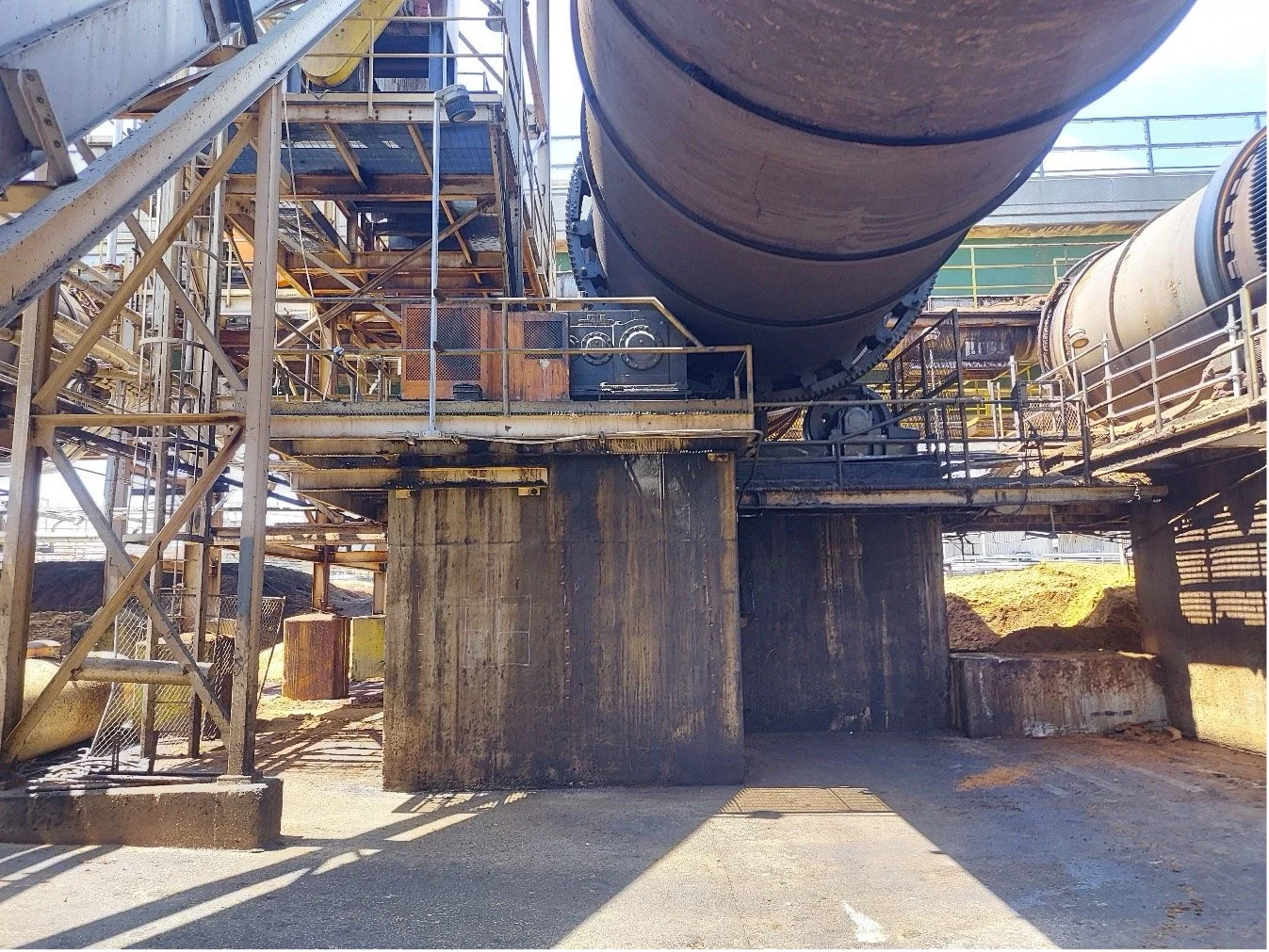
General photo of the dryer pier.
A food processing plant, located in Decatur, IL, was experiencing structural concerns associated with a concrete pier supporting heavy rotating equipment. During operation, the pier exhibited slight vibratory movement, and visual observations identified a continuous horizontal crack on all exposed faces of the pier. Additionally, localized pumping of water was observed at the interface between the pier and the surrounding concrete slab at one corner while the equipment was running, raising concerns regarding cracking depth, internal defects, and potential subsurface voiding beneath the slab.
NDT Corporation performed a nondestructive testing program to determine what conditions were causing the pier’s observed issues. Pulse Velocity (PV) testing was performed on multiple faces of the pier to assess concrete condition and estimate the depth of observed cracks. Ground-penetrating radar surveys were also conducted. High‑frequency radar was used on the concrete faces to map reinforcing steel layout and cover, while lower‑frequency radar was employed around the slab perimeter to assess subsurface conditions and identify areas of potential moisture entrapment or voiding beneath the slab.
Results
The testing results indicated that the horizontal cracks extended partially into the pier, with estimated crack depths generally on the order of several inches. Reinforcing steel within the pier was found to be consistent with the documented pattern, with slight variations in concrete cover.
Low-frequency radar data identified an area of moisture‑laden soils beneath the slab near the location where (water) pumping had been observed, suggesting localized subsurface distress.
Overall, the findings confirmed the depth of cracking and localized moisture‑ladened soil concerns while providing an assessment on internal conditions of the pier and surrounding concrete slab to support repair strategies.
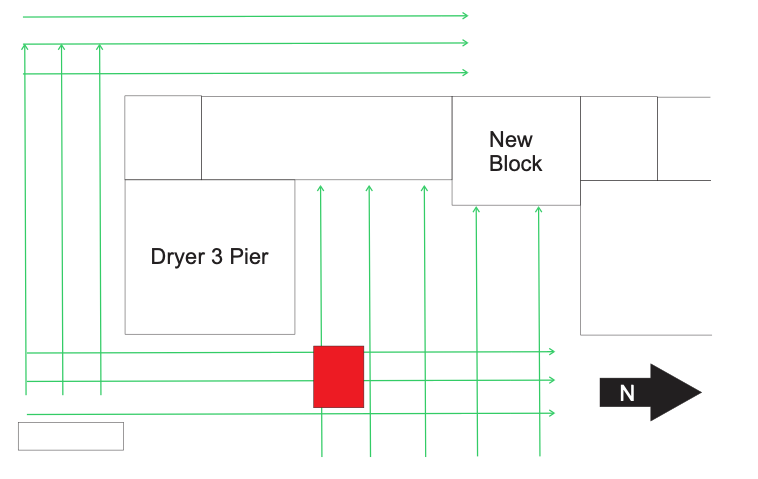
Low-frequency GPR lines of coverage with the suspect area of moisture identified.
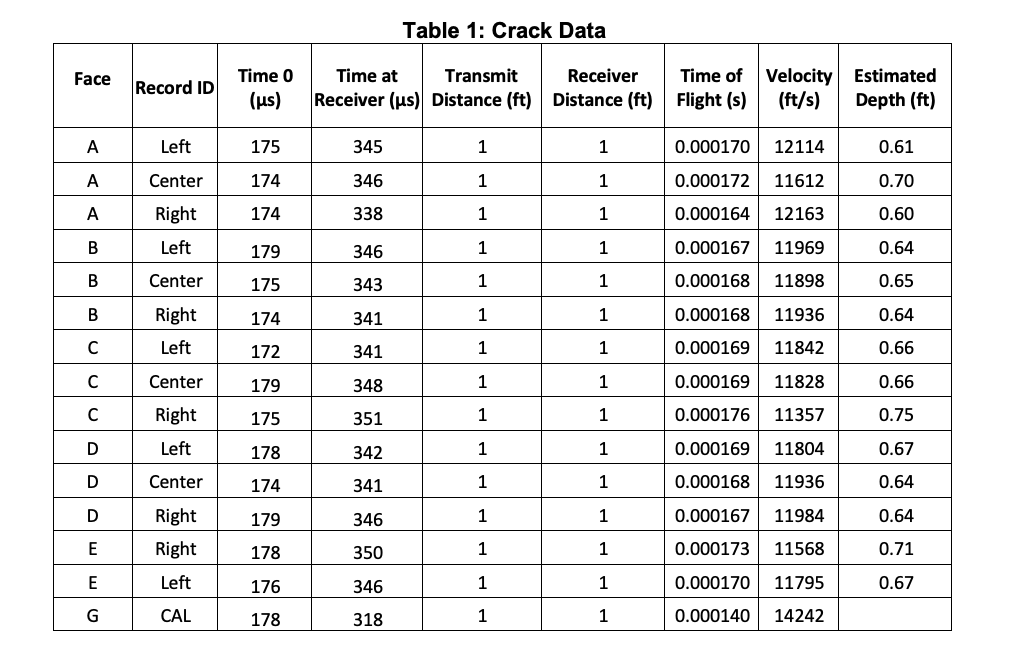
Impact Echo/Pulse Velocity testing results show crack depths from the concrete surface.