
Pipes & Tanks - Water Distribution and Collection
The transport and treatment of water and wastewater are essential to protecting public health and the environment.
A wide range of infrastructure, from buried pipelines to treatment and processing facilities, must operate reliably to ensure the delivery of clean water and the safe handling of wastewater.
Because these systems often operate underground or within restricted facilities, understanding their condition through testing is a critical step in managing risk and supporting infrastructure planning.
Our Expertise in Assessing Pipes and Tanks
NDT Corporation performs testing and evaluation services for water and wastewater infrastructure, including buried concrete and steel pipelines and treatment-related structures. Our work focuses on collecting objective data to document existing conditions and material performance.
Impact echo and pulse velocity (IE/PV) testing is commonly used to investigate reinforced concrete pipe conditions. Testing may be performed from interior or exterior surfaces, depending on accessibility, to document indicators of deterioration and changes in material response. By identifying these issues early, repairs can be done to prevent service disruptions.
For buried steel pipelines, NDT Corporation applies non-destructive testing methods such as ground penetrating radar for utility location, along with corrosion potential and resistivity measurements to document corrosion-related conditions. These testing methods provide data that owners and engineering teams can use to better understand buried infrastructure and support inspection, maintenance, and rehabilitation planning carried out by others.
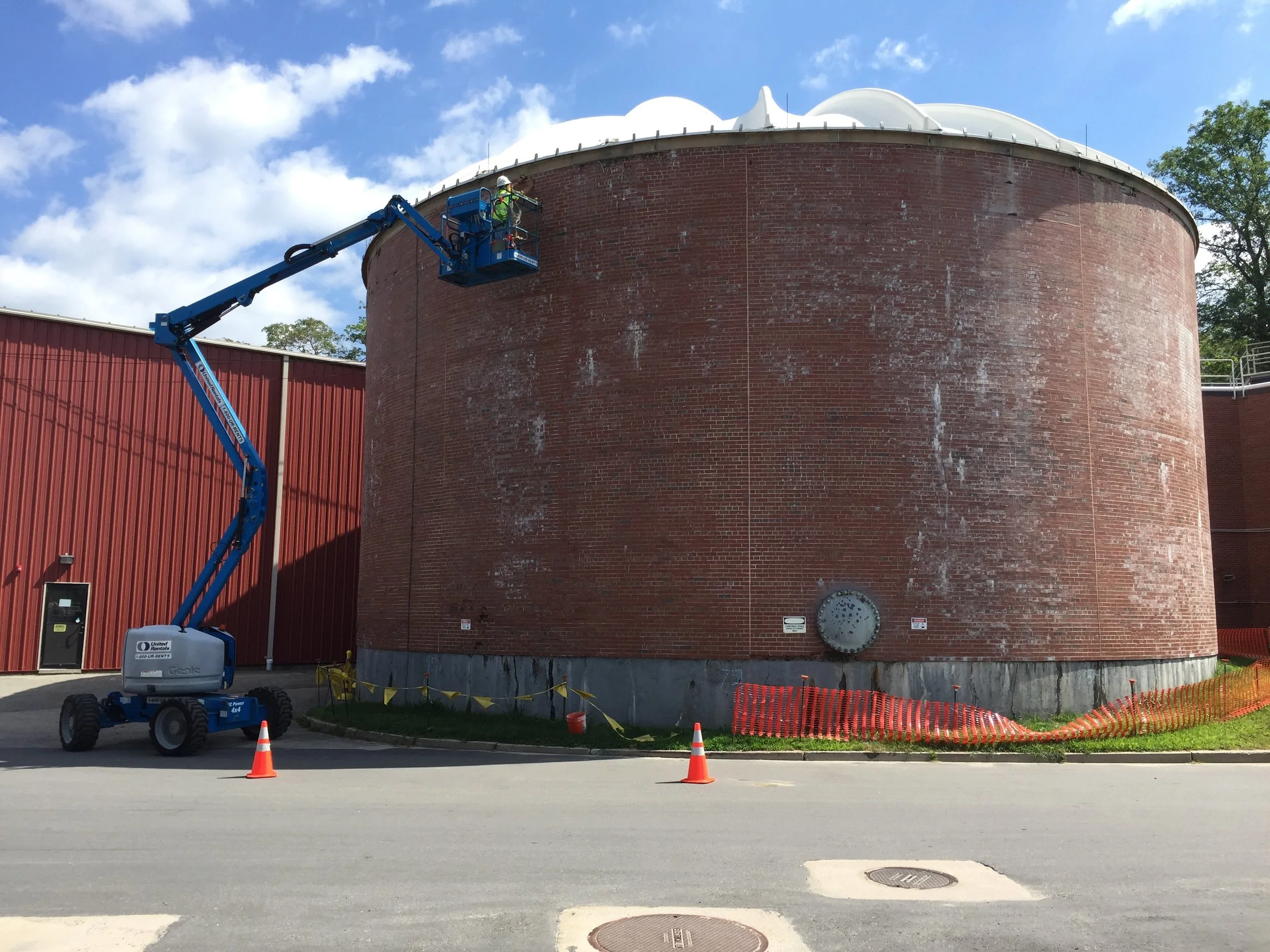
Assessing a water tank using GPR.
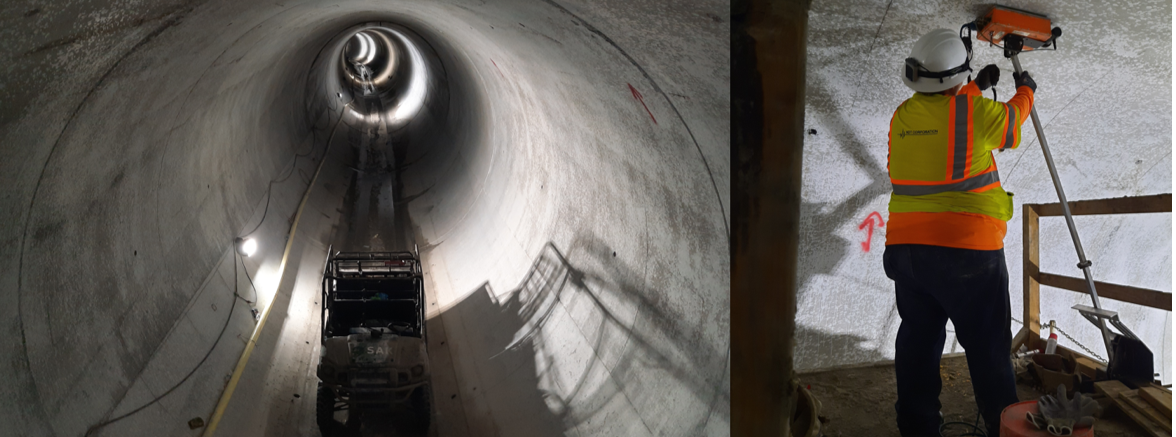
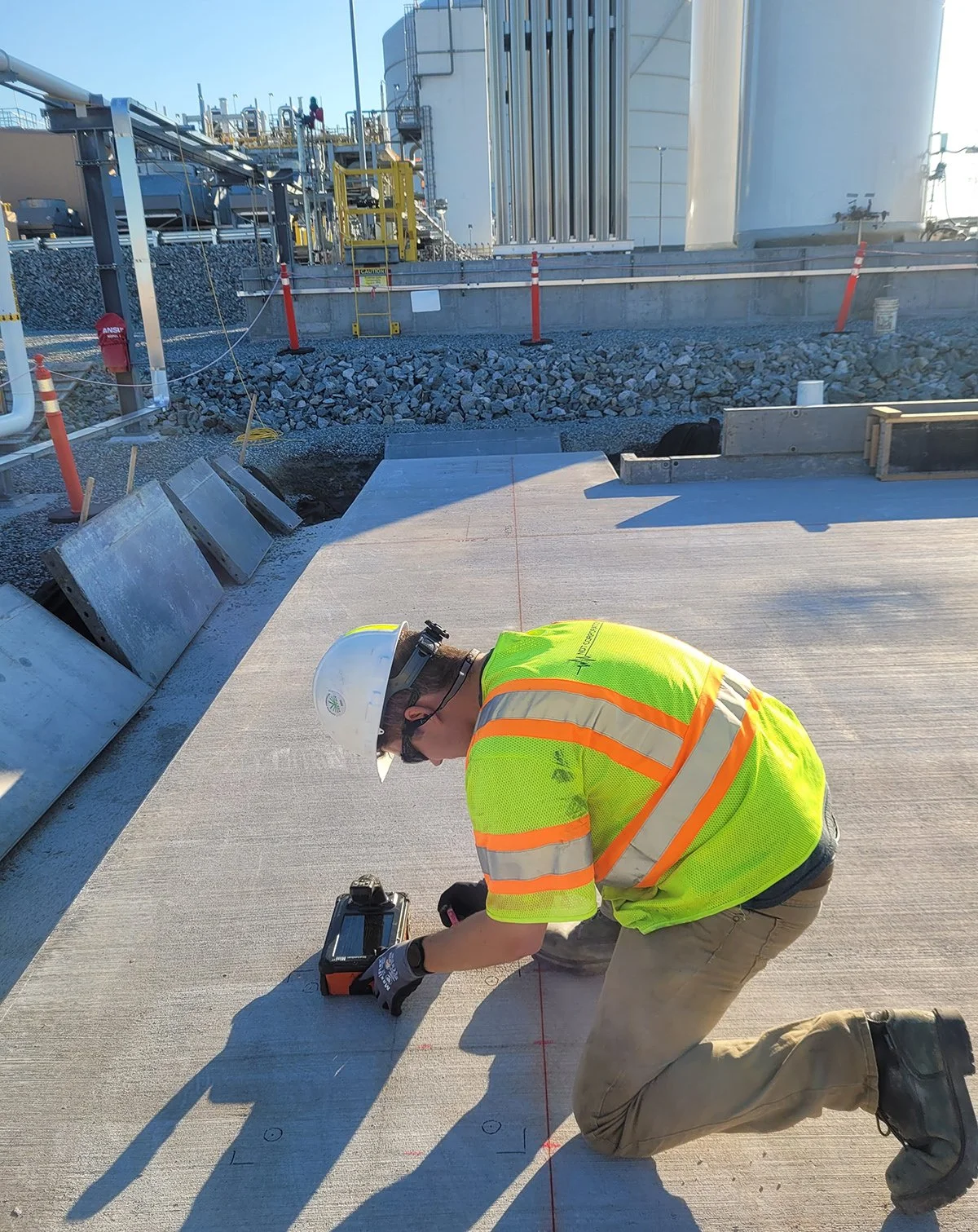
GPR used to verify the thickness of a cast in place concrete pipe required to be 12” thick. Continuous GPR scanning at the top of the pipe replaced a drilling requirement to confirm the thickness every 150’ over 2.5 miles.
Water Infrastructure Challenges
Failures within water infrastructure, such as pipe breaks, can lead to boil-water advisories, service interruptions, and increased strain on distribution systems. Aging assets, variable soil conditions, and limited access to buried infrastructure further complicate inspection and evaluation efforts.
Many power generation facilities rely on continuous cooling water to operate safely. Disruptions to water supply or cooling systems can impact facility operations and, in severe cases, create broader regional risks.
Proper wastewater transport and treatment are essential to protect human health and the environment. Damage to pipes or treatment facilities can result in unintended releases that pose serious risks.
Applying IE/PV testing on a Precast Cylindrical Concrete Pipe (PCCP).
Related Projects
Experience You Can Rely On
Founded in 1994, NDT has built a reputation for delivering reliable data, practical insight, and responsive service on technically complex projects. Our team combines decades of field experience with advanced testing technologies to produce results that are clear, defensible, and actionable for engineers and owners.