
Concrete Digester Tank Deterioration Testing Using Non Destructive Testing
Summary
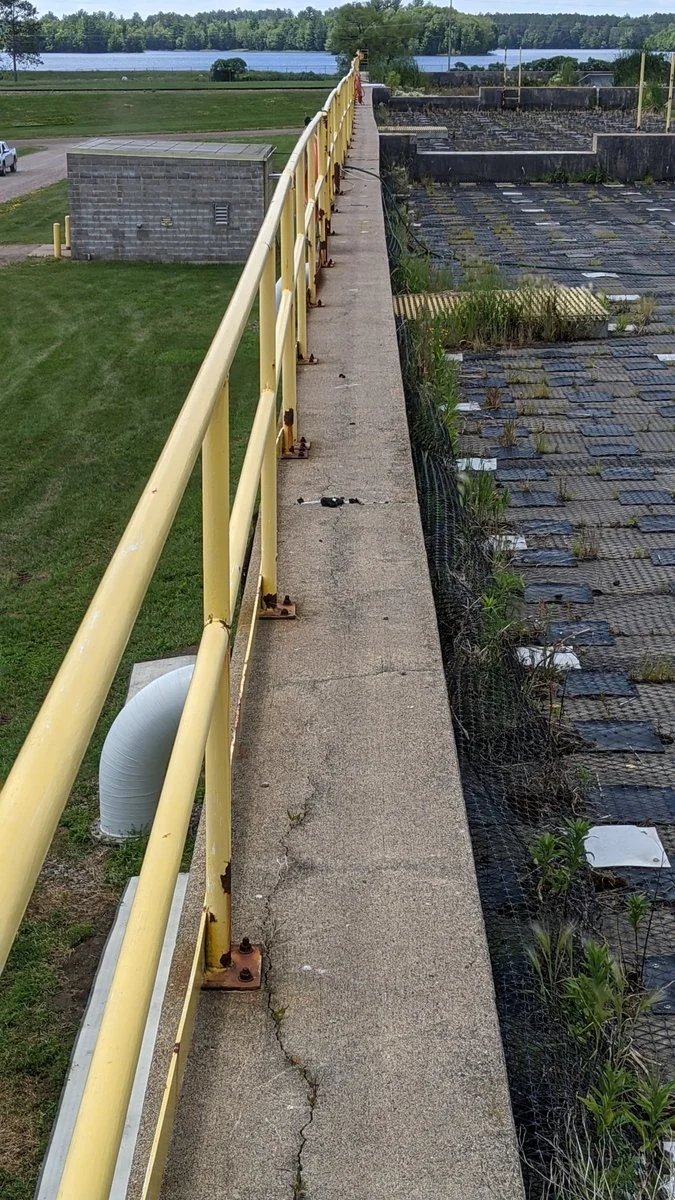
NDT Corporation was contracted by a local engineering firm to provide nondestructive and materials testing services to support a condition assessment of an anaerobic digester tank at a water treatment facility in Wisconsin. The tank was experiencing visible vertical cracking along the wall surfaces, particularly at the top of the walls, which raised concerns regarding the integrity and durability of the structure.
NDT collected nondestructive data and concrete samples to evaluate internal conditions, determine the extent and depth of cracking, and identify potential deterioration mechanisms. The information gathered provided the engineering team with a clearer understanding of the condition of the tank walls and supported the development of repair and long-term management strategies.
Scope
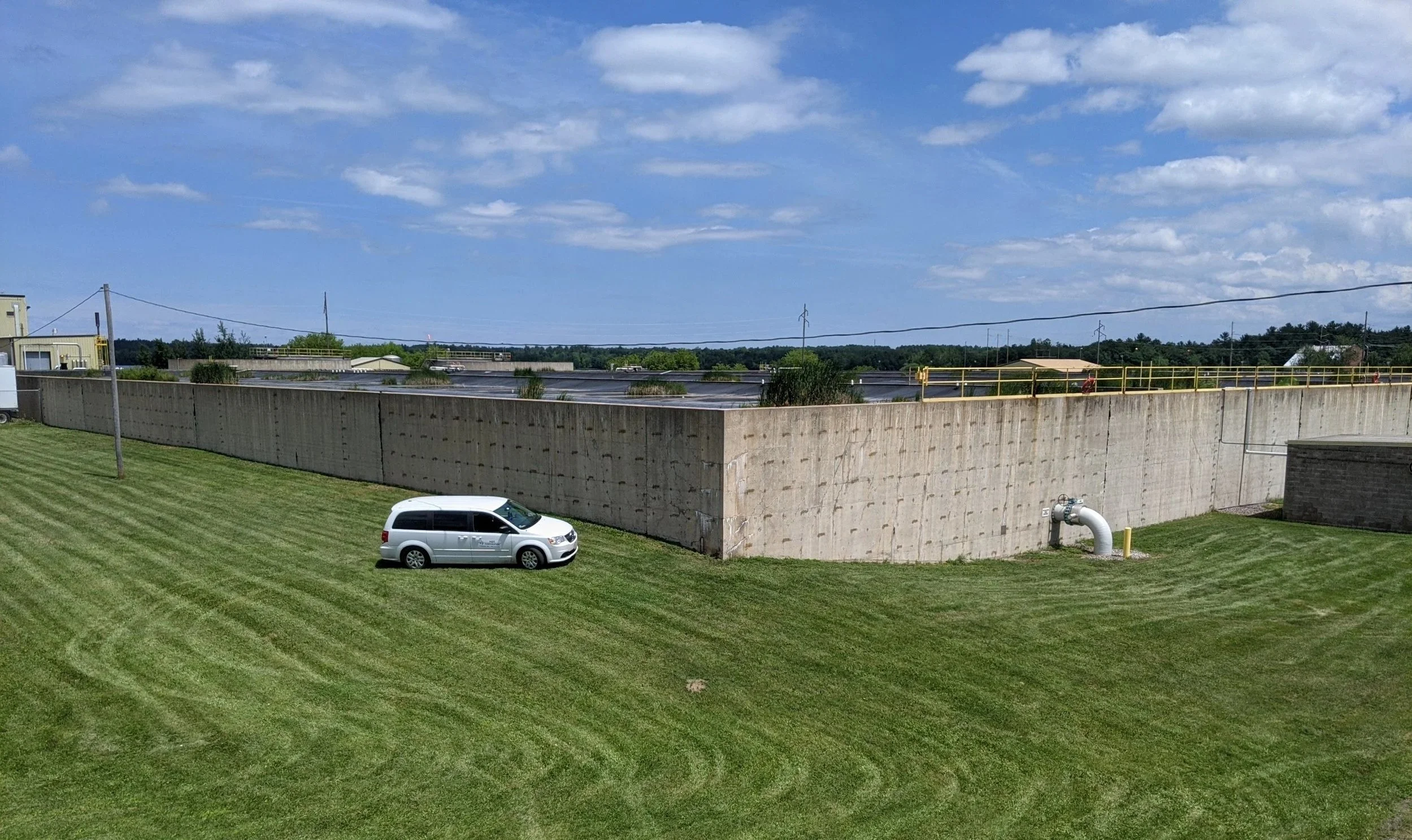
The structure is approximately 450 feet long by 418 feet wide in plan and includes three interior walls forming four tank basins measuring roughly 450 feet by 100 feet each. The tank is partially below grade, with exposed exterior wall heights ranging from approximately 7 to 20 feet, and includes construction joints at approximately 64-foot intervals. Due to the structure’s viable distress, the owner had concerns regarding the integrity and durability of the tank.
The objective of this investigation was to employ non-destructive and concrete sampling methods to:
Provide a general condition assessment of the concrete walls
Determine the extent of vertical cracking at the top of the walls
Identify the root cause of the observed cracking distress
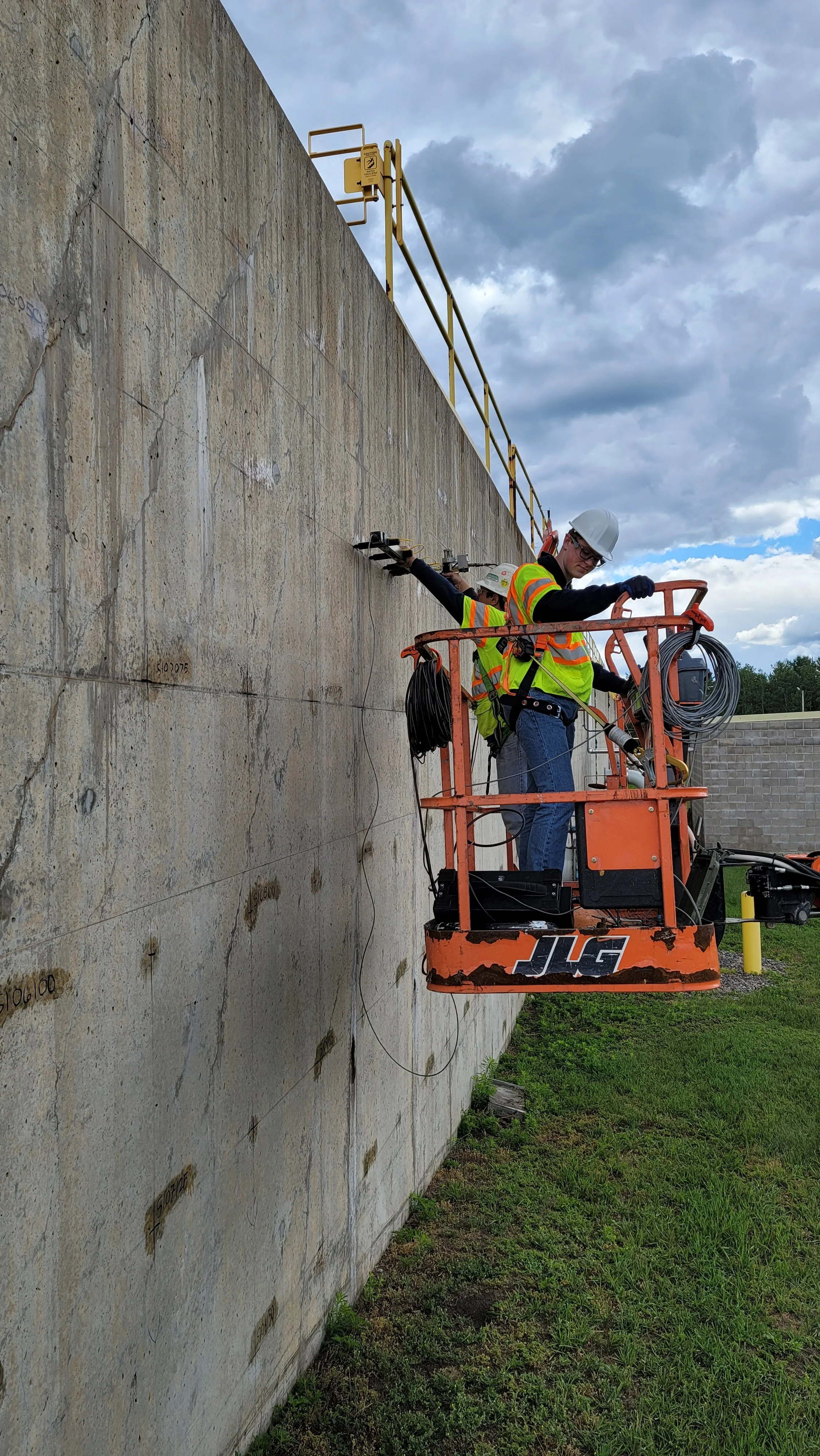
The investigation focused on the exterior (perimeter) walls and incorporated multiple nondestructive testing methods alongside targeted concrete sampling. Ground penetrating radar (GPR) was used to verify reinforcing steel spacing, determine concrete cover at the exterior face, and confirm wall thickness. Impact echo and pulse velocity (IE/PV) testing was used to assess internal concrete condition, identify delaminations, estimate in-place concrete strength, and determine both wall thickness and the vertical extent of cracking. Corrosion potential measurements were collected to provide an indication of corrosion activity within the reinforced concrete.
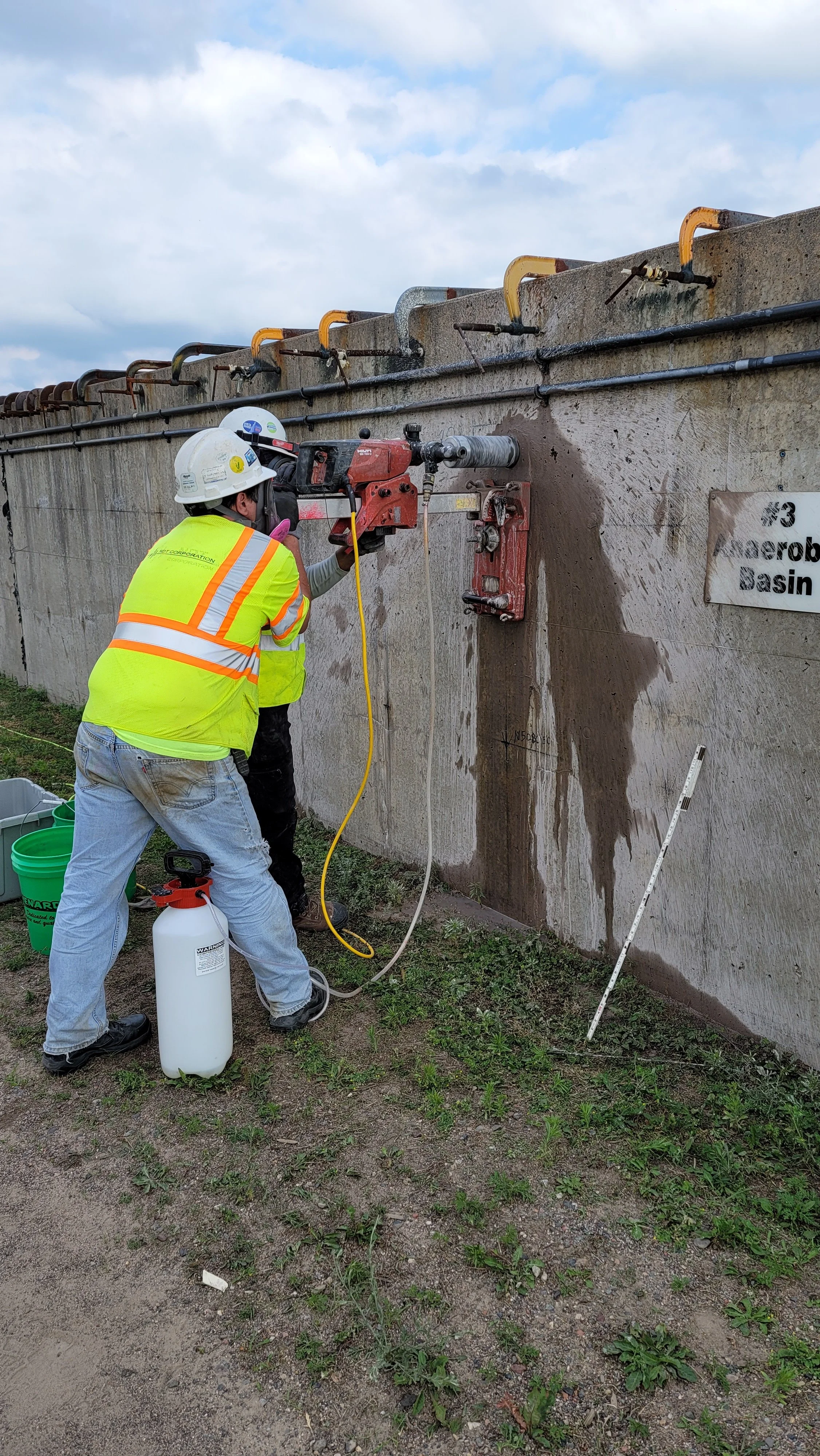
In addition to nondestructive testing, concrete cores were extracted to confirm the depth of vertical cracking and to support field and laboratory analysis. These samples were used to determine carbonation depth, measure compressive strength, evaluate chloride concentrations, and perform petrographic analysis to better understand the concrete composition and identify underlying deterioration mechanisms.
Solution
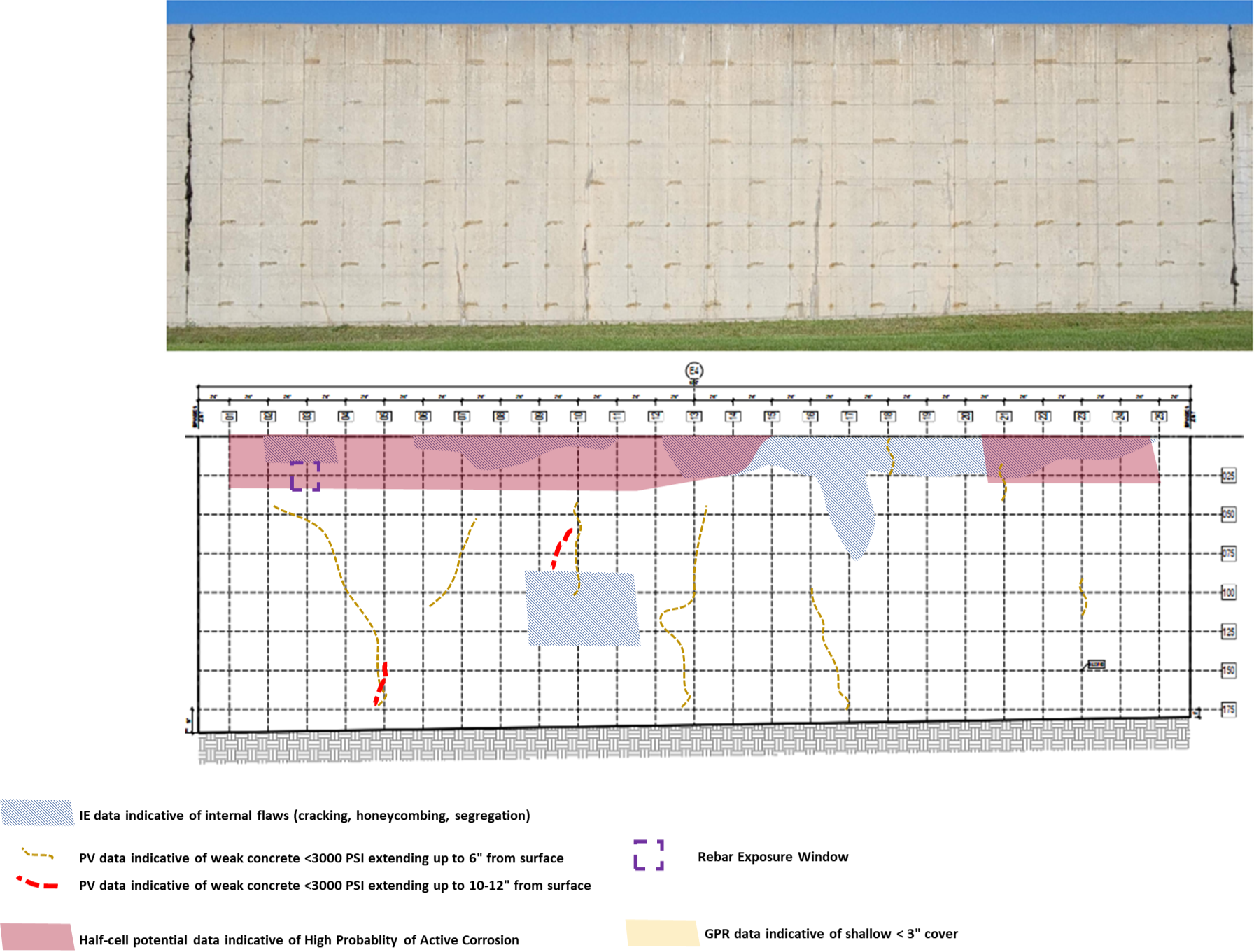
The combination of nondestructive testing and materials analysis provided a detailed understanding of the condition of the exterior tank walls. Data from IE/PV, GPR, and corrosion potential measurements indicated that the most significant deterioration was concentrated within the upper 2 to 3 feet of the walls above the waterline, where increased cracking, corrosion activity, and material degradation were observed. Below the waterline, deterioration was generally limited to the outer 2 to 3 inches of concrete, extending to the depth of the exterior reinforcing steel.
Concrete core analysis confirmed the presence and depth of vertical cracking and identified multiple contributing deterioration mechanisms, including alkali-silica reaction (ASR), freeze-thaw damage, and microbial-induced corrosion associated with hydrogen sulfide exposure.
The data collected through this investigation documented both the extent and causes of deterioration, providing the engineering team with the information needed to evaluate repair approaches and long-term strategies for the structure.