
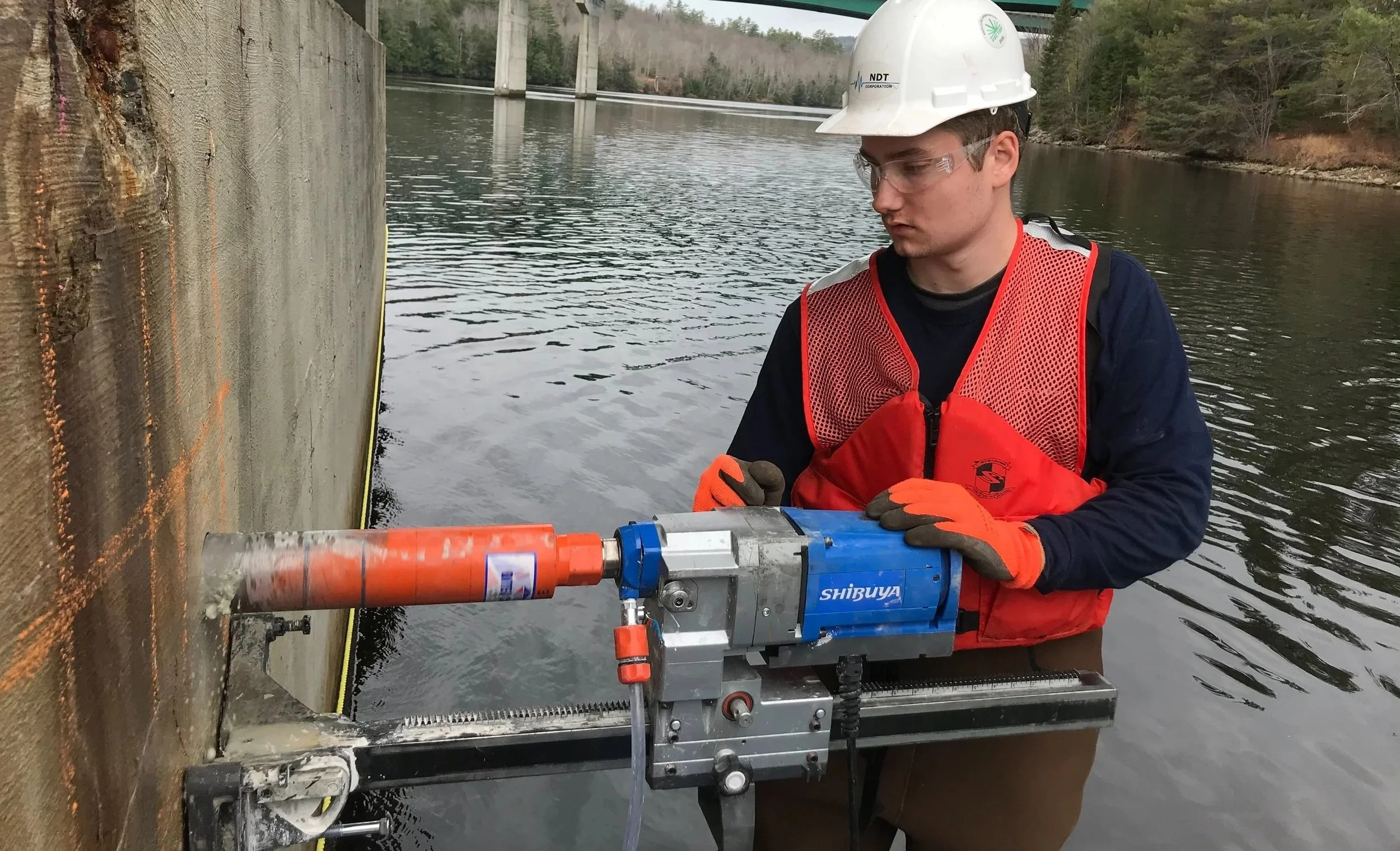
Core Collection and Material Testing
Accurate material testing begins with proper sample collection.
NDT Corporation specializes in the collection of concrete cores and related material samples, which are then evaluated through a combination of on-site testing and laboratory analysis depending on project requirements.

Core Extraction & Sample Collection
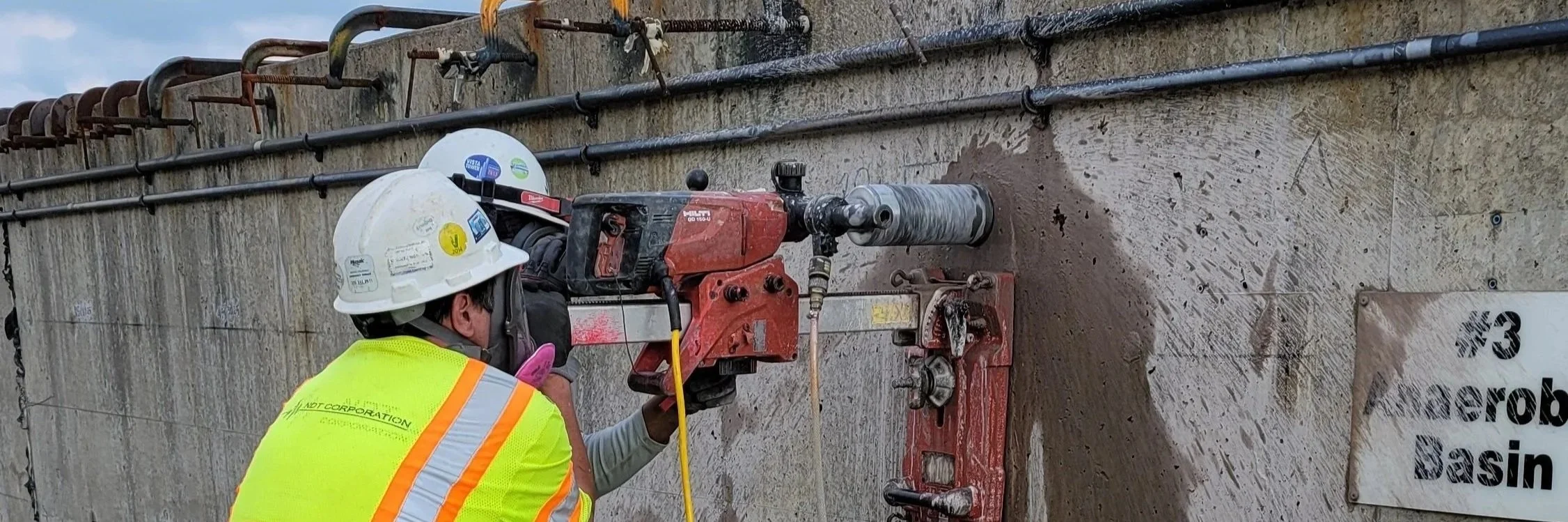
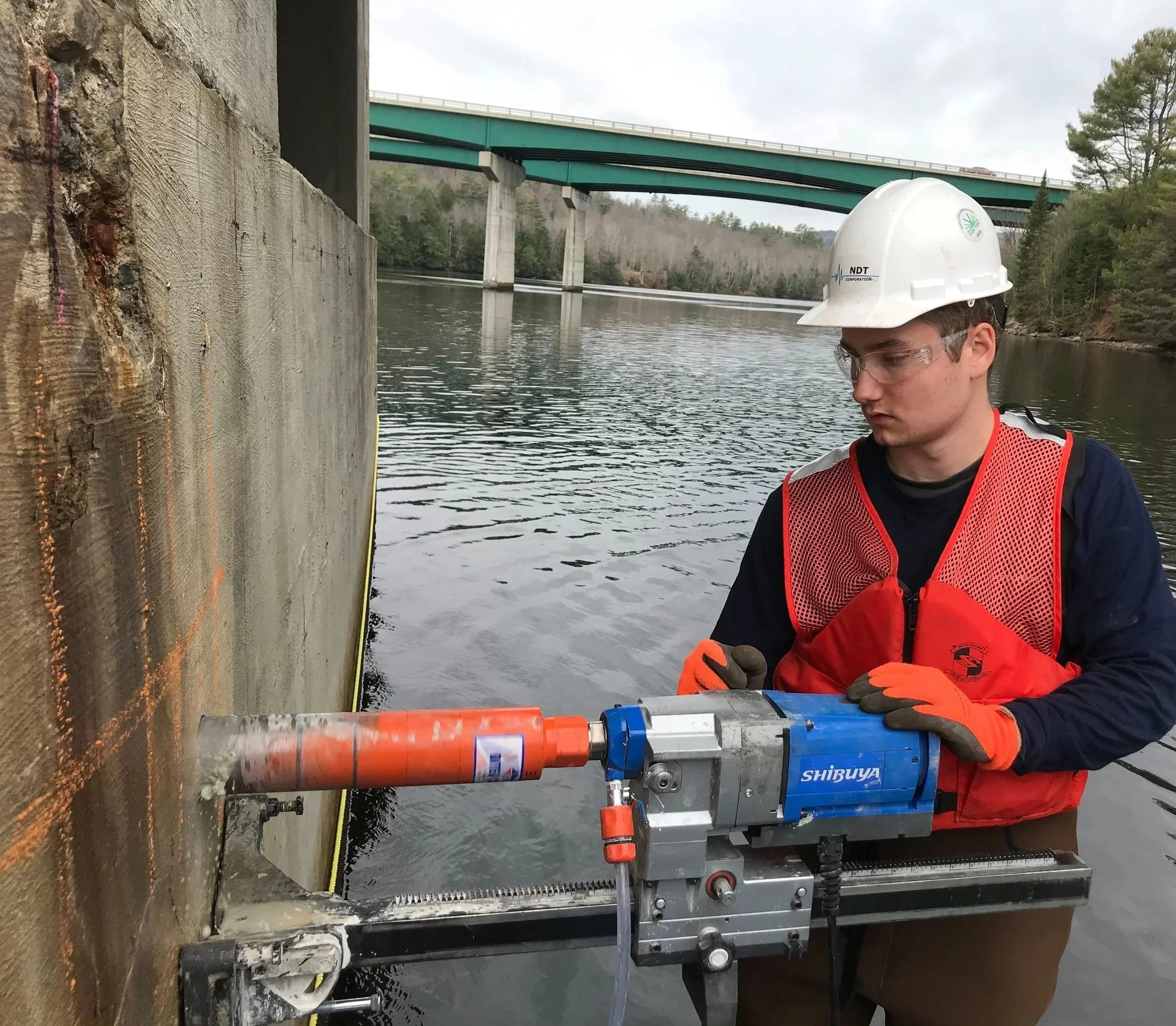
NDT Corporation specializes in the controlled extraction and collection of samples required for material evaluation. All samples are obtained using methods that preserve their integrity, ensuring they are suitable for both field and laboratory testing.
Our sampling capabilities include:
Concrete core extraction
Concrete powder sampling for chemical analysis
Reinforcing steel sampling
Grout and repair material sampling
Following extraction, samples may be evaluated through field testing performed by the NDT team or submitted to a qualified third-party laboratory for further analysis.
Field Testing Services
Field testing is performed by NDT Corporation’s team to provide direct, on-site insight into concrete condition and deterioration. These results help guide further investigation and testing decisions.
Carbonation Depth
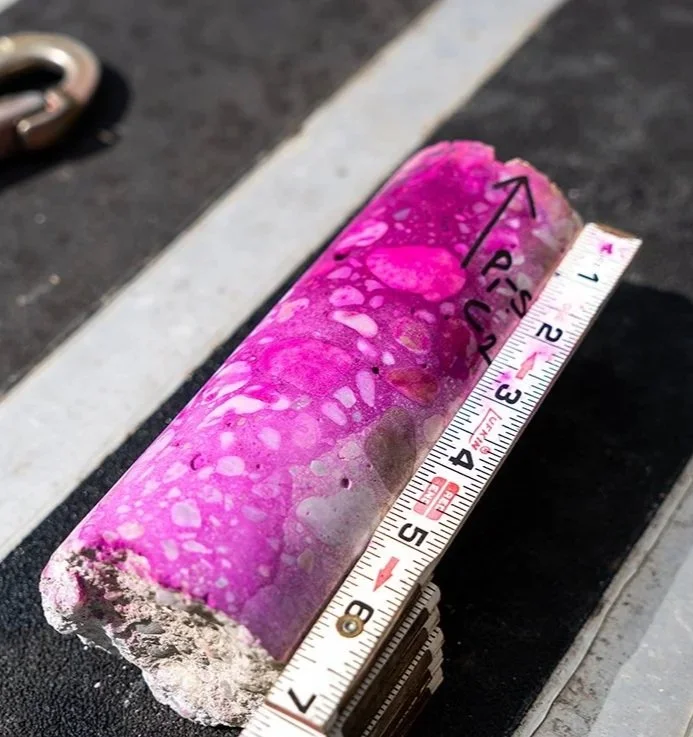
As part of NDT Corporation’s field testing services, carbonation depth testing is used to measure how far carbonation has progressed into concrete. As carbon dioxide enters moist concrete, it reacts with the cement paste and reduces the concrete’s pH. When carbonation reaches the depth of the reinforcing steel, the pH of the concrete surrounding the steel is lowered, reducing the protective environment that normally limits corrosion.
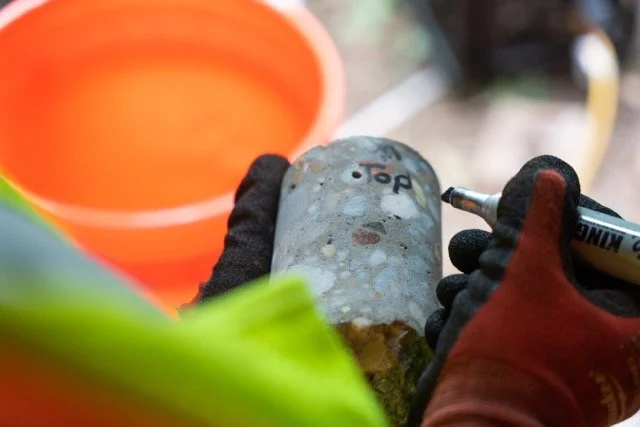
To assess this, a pH-sensitive indicator solution is applied directly to the extracted core, allowing the carbonation depth to be visually identified on-site. Areas that turn pink indicate uncarbonated concrete with higher pH, while areas that remain colourless indicate carbonated concrete.
Once this protective condition is lost, reinforcing steel becomes susceptible to corrosion in the presence of moisture and oxygen.
Carbonation depth measurements are commonly compared with the depth of reinforcement cover to document whether carbonation has reached or is approaching the reinforcing steel. The resulting data provides information that owners and engineers can use when considering corrosion risk and durability-related decisions.
Concrete cores are collected from structures for compressive strength testing to document concrete quality and strength.
These measurements provide data that engineers can use when considering structural capacity and load rating evaluations.
Laboratory Testing Services
Extracted samples are submitted to trusted third-party laboratories for testing to provide detailed insight into material properties and deterioration processes. These results help engineers and owners better understand material condition, assess deterioration, and make informed decisions regarding repair and long-term performance.
Petrography
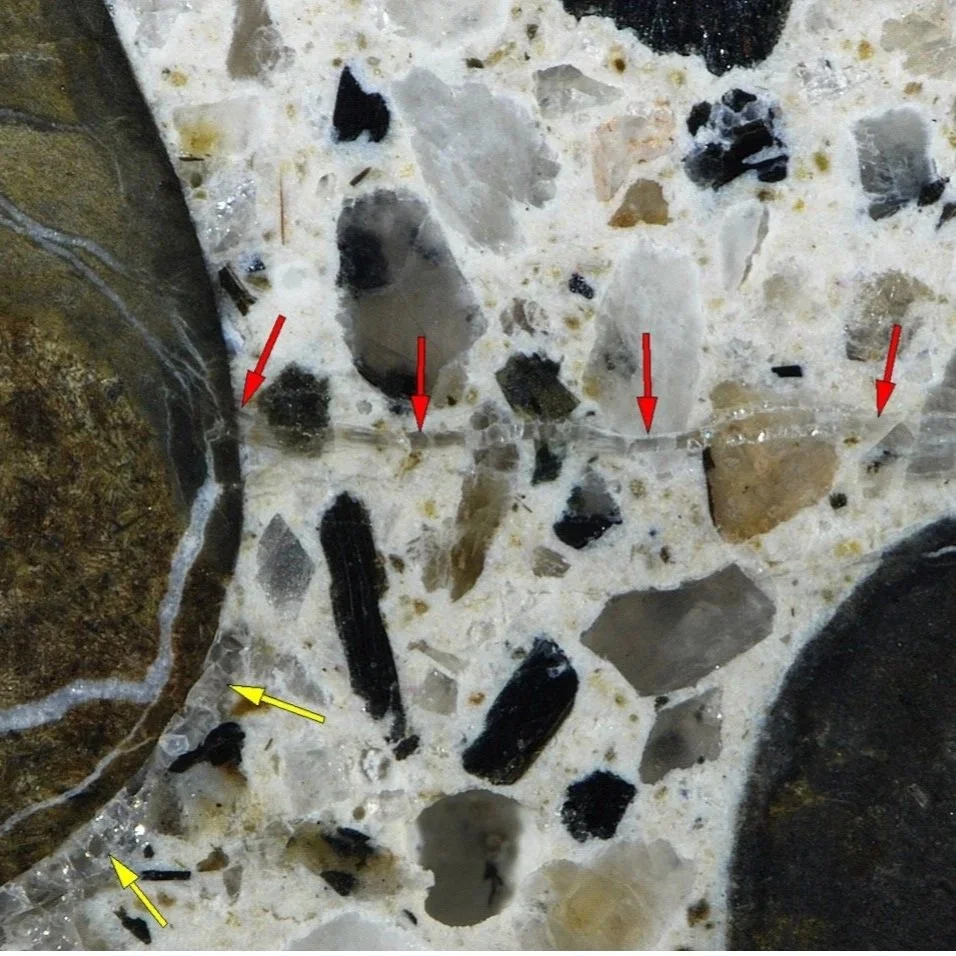
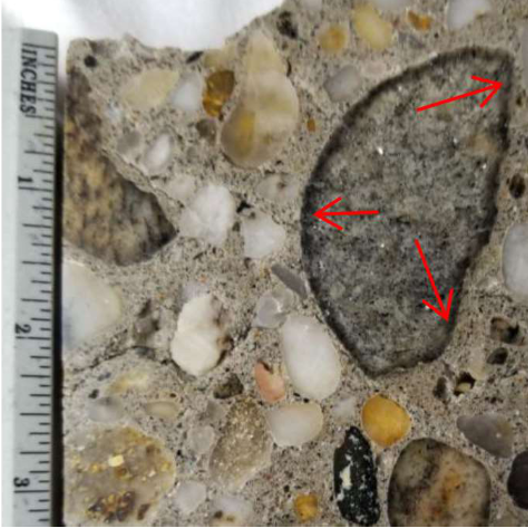
Petrographic analysis is used to identify physical deterioration processes, such as freeze–thaw damage, as well as chemical deterioration mechanisms, including alkali-silica reaction (ASR) and sulfate attack within concrete. The analysis also documents the general properties and volumetric proportions of the concrete mixture used during original construction.
Petrographic examination provides detailed information on aggregate types, binder composition, and observed distress features present within the concrete samples.
Chloride Concentration
Concrete samples are collected from structures to measure chloride content and document the extent of chloride penetration within the concrete. Laboratory testing is used to quantify chloride concentrations at various depths relative to the reinforcing steel.
The resulting data provides information on the presence and distribution of chlorides within the concrete and can be used by engineers to assess corrosion-related considerations. Chloride concentration data is commonly used by engineering teams as input for durability evaluations and service life modeling of reinforced concrete structures.
Compressive Strength
Experience You Can Rely On
Founded in 1994, NDT has built a reputation for delivering reliable data, practical insight, and responsive service on technically complex projects. Our team combines decades of field experience with advanced testing technologies to produce results that are clear, defensible, and actionable for engineers and owners.