
Corrosion Testing in a Reinforced Concrete Parking Garage Using NDT and Material Testing
Summary
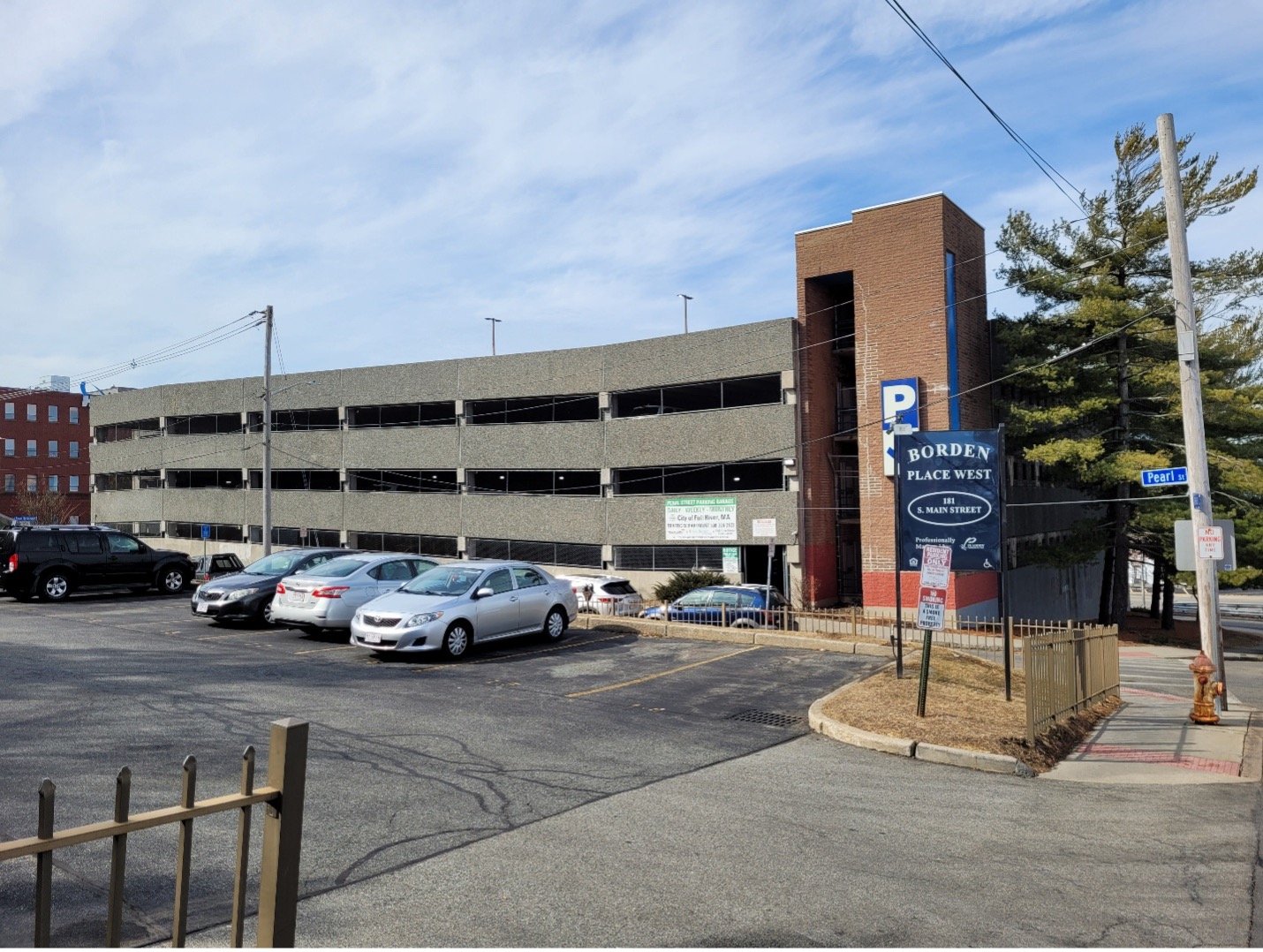
NDT Corporation was contracted to assess the condition of structural members of a municipally owned Parking Garage. NDT used ground penetrating radar (GPR) and impact-echo/pulse velocity examinations to map the internal structure of concrete beams and columns of the parking garage.
NDT Corporation also evaluated the extent of active corrosion by collecting half cell potential readings and collected various concrete samples for lab testing.
Through these tests, NDT revealed active corrosion present in multiple support columns, beams, and walls in the garages.
Scope
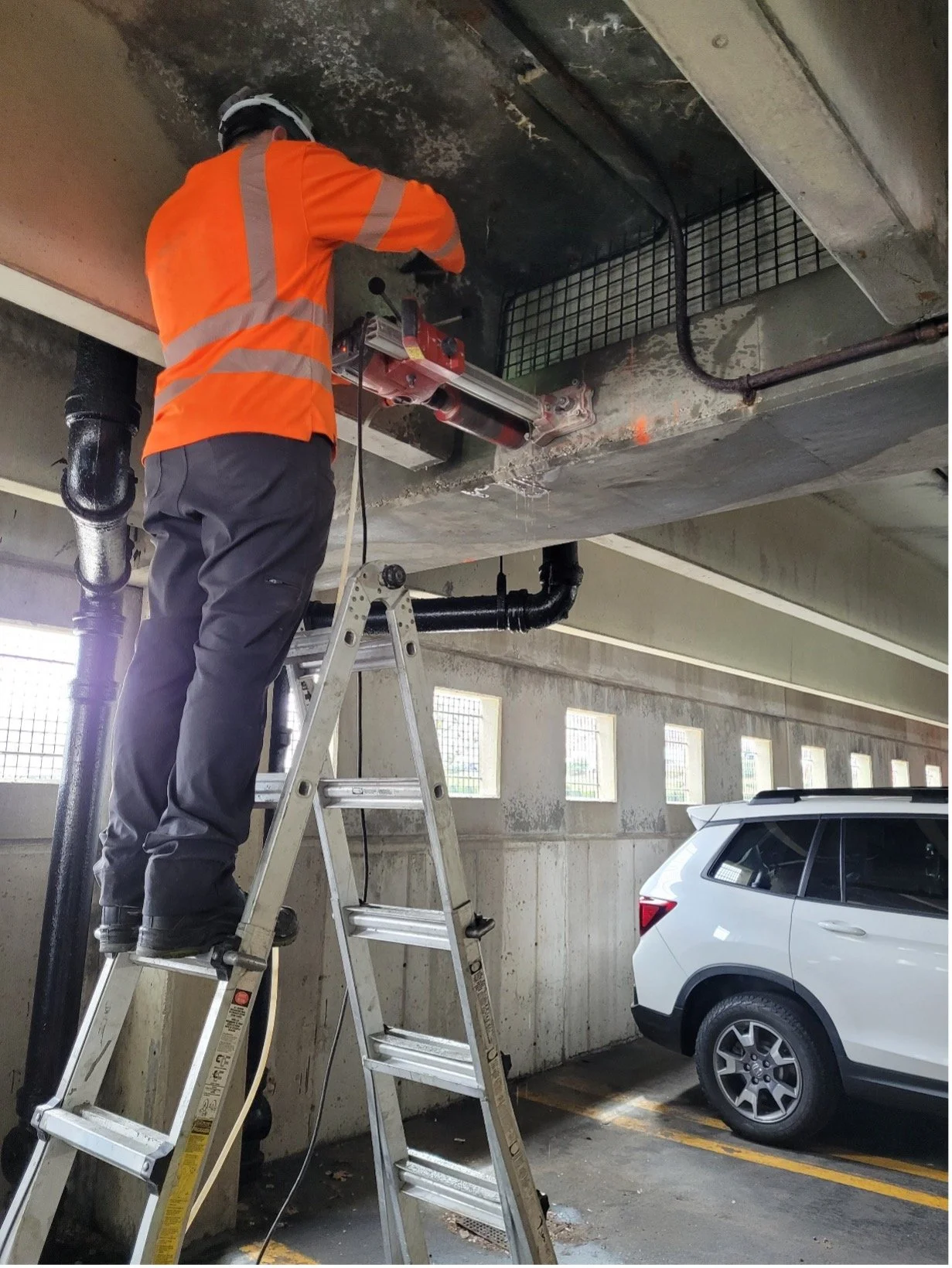
Taking a concrete core of a Double T-Beam.
Located in Massachusetts, two municipally owned, multi-level parking garages exhibited deterioration and due to worries about structural issues an engineering firm was hired to assess the condition of the garages and determine if repairs are necessary. NDT Corporation assisted the engineering firm and performed non-destructive and traditional sampling methods to evaluate how corrosion has impacted the structural integrity of the reinforced concrete in these parking garages.
NDT Corporation used ground penetrating radar, impact echo testing, and pulse velocity testing to efficiently map the internal structure of the concrete on inverted t-beams, double-t beams, structural columns, and walls in both garages. These members were assessed for overall durability, presence of voids, cracks, and delaminations in the concrete along with the potential for active corrosion (half-cell readings).
In addition to these nondestructive methods, NDT also took concrete cores samples to perform petrography and assess the matrix of the concrete. Finally, the lab visually examined the concrete cores at a very close level to determine the concrete paste and aggregates used to make the concrete, uncover voids, and see if alkali-silica reactions were present.
Solution
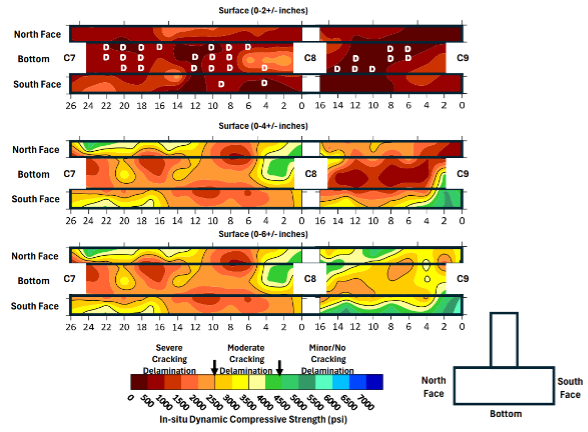
Graphical results of Impact Echo/Pulse Velocity testing.
Using the results gathered through GPR and IE/PVA, it was determined that the most severe damage was located at the outer surface of the concrete, with minimal damage at or deeper than four to six inches below the surface. However, isolated areas of moderate deterioration were noted at deeper areas.
Analysis of the sampled concrete cores allowed NDT to determine carbonation depth and chloride concentrations, which were found to be extremely high, likely due to the accumulation of deicing salts.
NDT Corporation’s testing efforts successfully documented the current condition of the garages and allowed the engineers to develop a proactive repair strategy implemented in phases.