
Evaluating a Concrete Dam Spillway Using Non-Destructive Testing
Summary
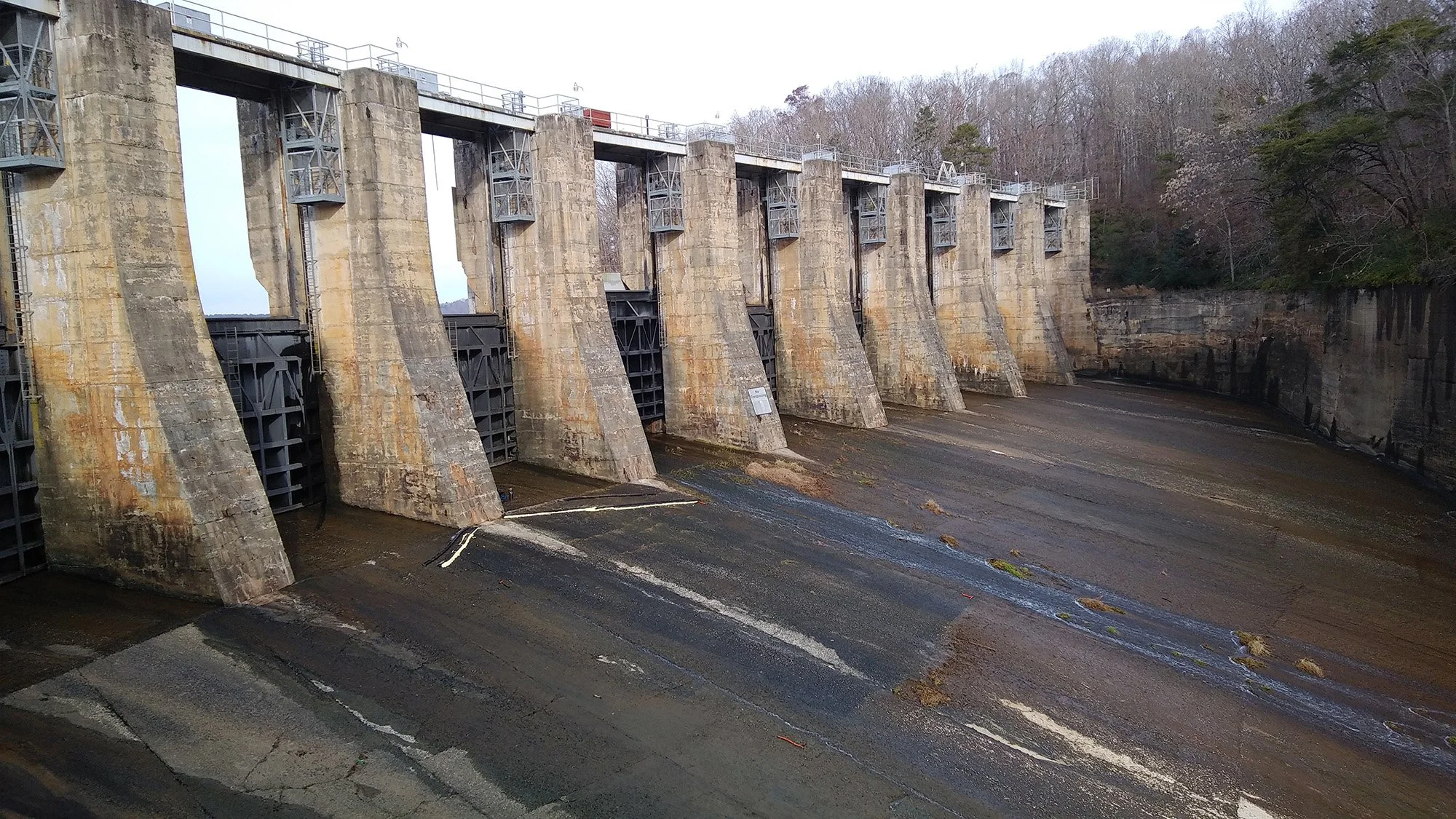
NDT Corporation was contacted by Cube Hydro’s engineering consultant, WSP, to determine the condition of a concrete spillway associated with a large hydro-electric power generating facility in Badin North Carolina.
Limited drawings existed for this structure built in the late 1920’s. NDT Corporation collected ground penetrating radar (GPR) and impact echo/pulse velocity (IE/PV) data to determine the steel reinforcement details, cover depth, concrete slab thickness and compressive strength along with confirming the slab was founded on both bedrock and gravel fill with void conditions present.
Scope
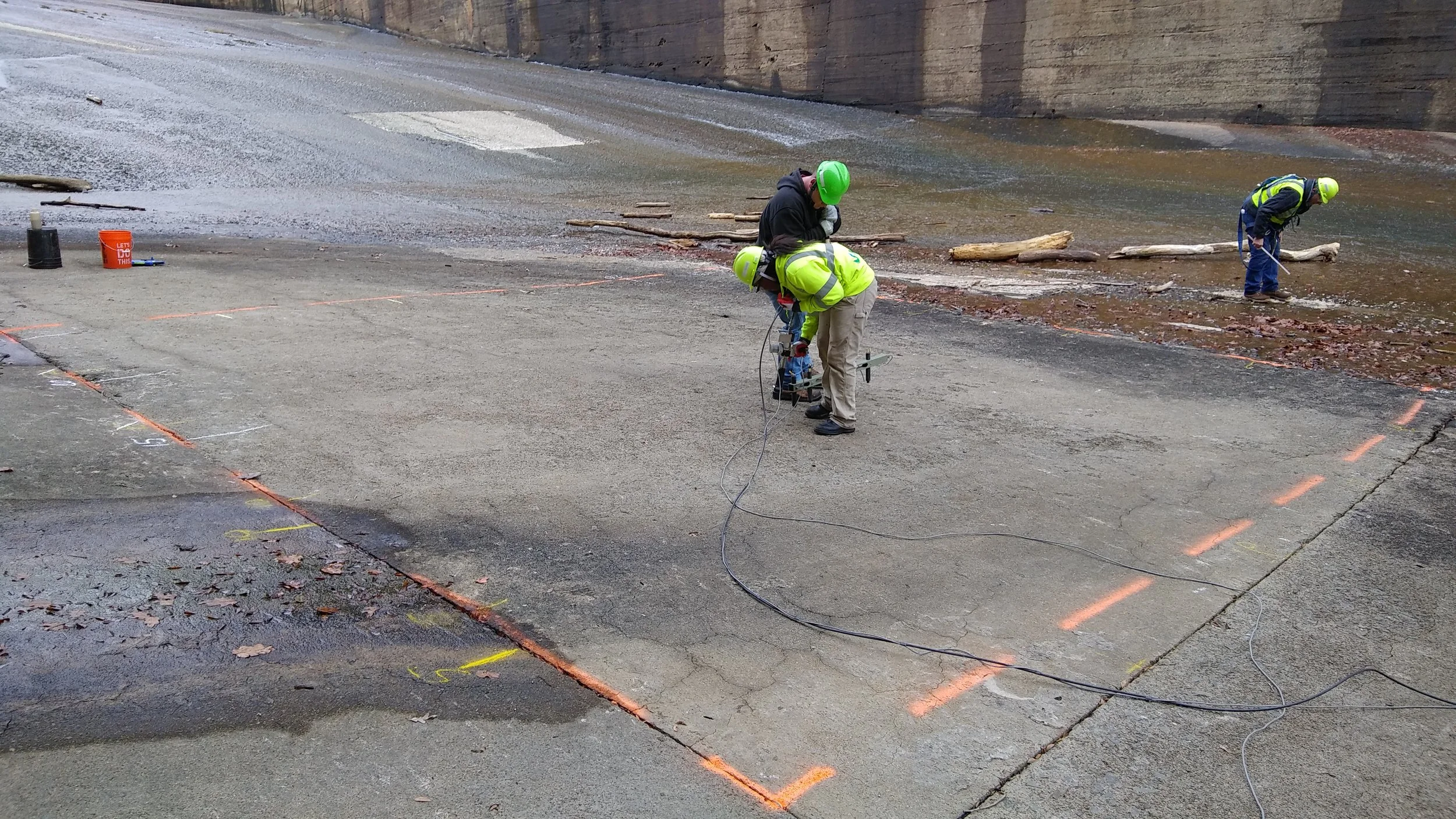
Collecting IE/PV data within a typical spillway test area.
NDT Corporation (NDT Corp.) was asked to conduct a Phase 1 assessment of the concrete spillway. Two locations were determined by the engineers to assess the different construction conditions and assess the condition of the concrete. One test location was at the top of the spillway, and one was located downstream. The engineers required compressive strength estimates of the concrete, thickness of the concrete, reinforcing pattern present, and potential voiding information on the materials below the slab.
NDT Corp. collected Impact echo/pulse velocity (IE/PV) and ground penetrating radar (GPR) measurements to assess the area of the two test locations. The IE/PV data was collected in a grid pattern within the designated areas to determine the concrete compressive strength as well as the thickness of the slab. GPR data using a high frequency antennae (1500 MHz) was collected along a similar grid for the purpose of determining the reinforcing pattern, cover depth and to verify the slab thickness. A low frequency antenna (900 MHz and 400 MHz) was used to determine the condition of material placed below the slab and if voiding was present.
Solution
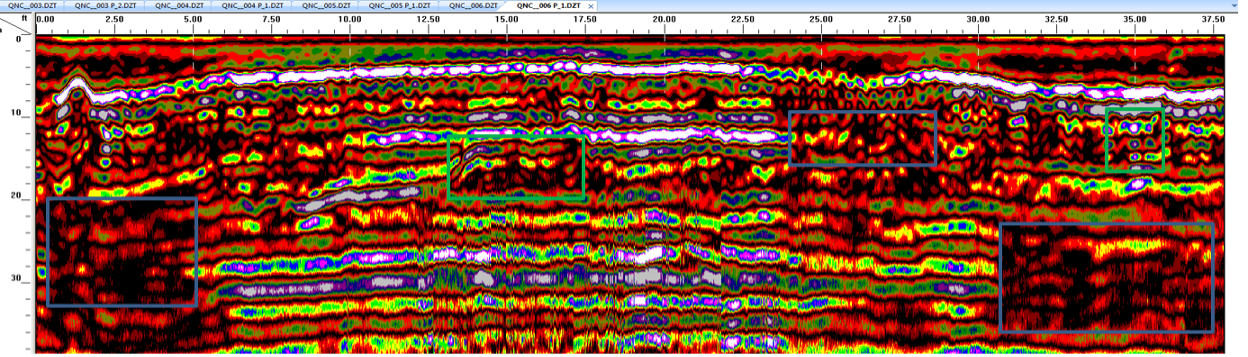
Report GPR Data voids in boxes.
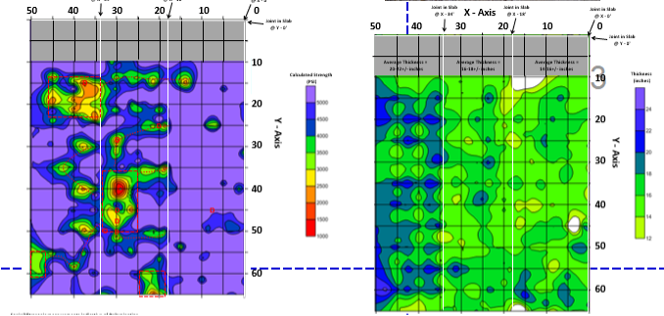
The results of the IE/PV data yielded compressive surface strength estimates between 3000 and 5000 PSI for the concrete and confirmed the thickness of the slab was between 14-18 inches.
Vertical and horizontal bar spacing for each area, depth of cover, and slab thickness verification was determined by the GPR scans. The results of this testing were combined into a report and submitted to the engineer to assist them in determining the differences in construction between the two areas in question.
GPR showed variable conditions supporting the slab included bedrock, fill material and the presence of voiding existed below the spillway concrete. Small holes were drilled into voiding areas to allow for a borescope to confirm the GPR results.
By delivering reliable, non-destructive testing data, NDT Corporation equipped the project team with the critical insights needed to evaluate existing conditions and move forward with confidence.