
Locating Grout Voids in Post-Tensioning Ducts of a Three-Span Concrete Bridge Using NDT
Summary
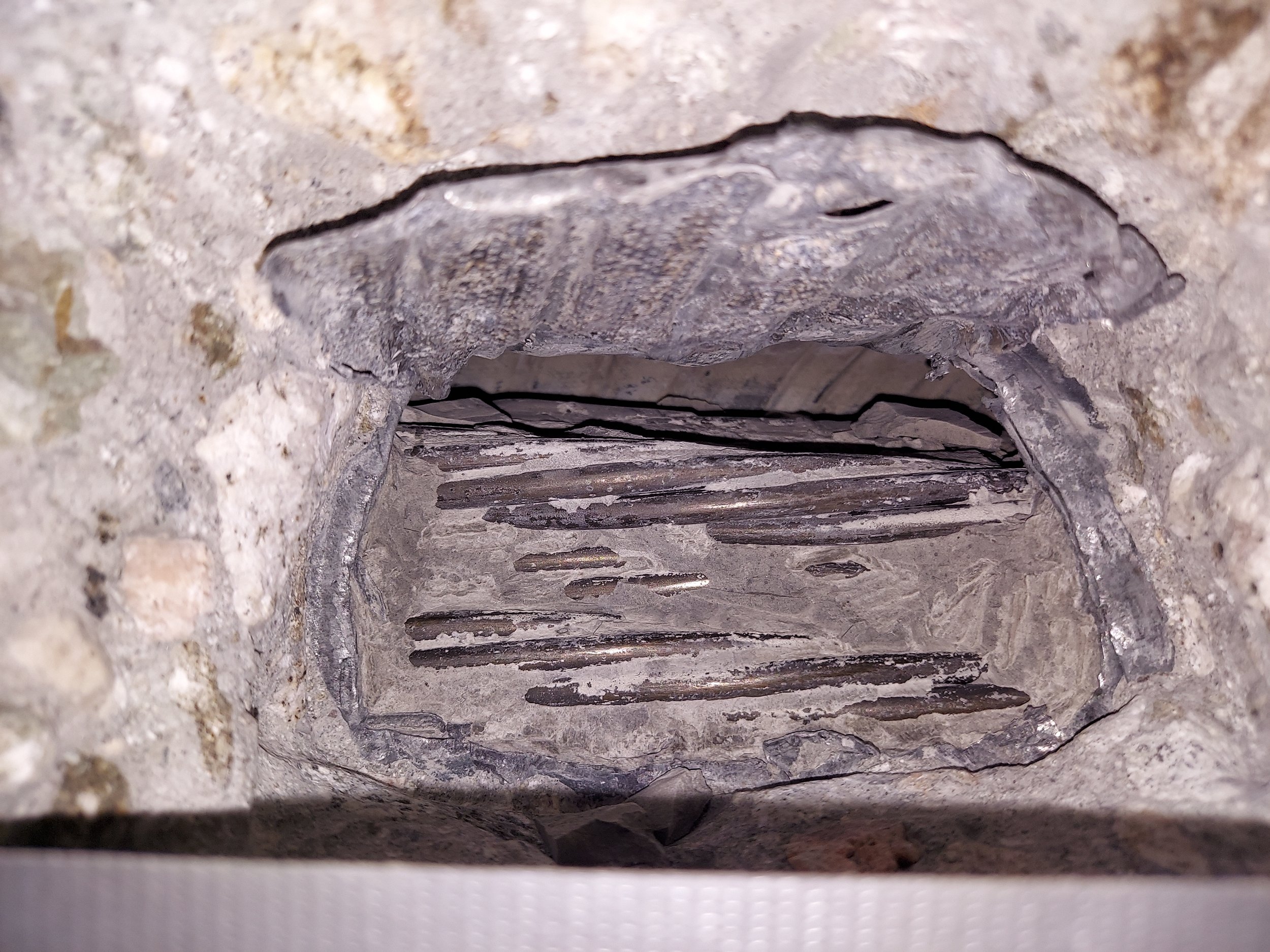
PT tendon duct opening.
NDT Corporation performed a targeted nondestructive evaluation of a three-span post-tensioned concrete box girder bridge to investigate increasing soffit cracking observed within the structure's post-tensioning system.
Following internal inspections that revealed extensive grout leakage during original construction and cracking concentrated at the interface of the center girder and soffit slab, NDT was retained to assess the condition of the post-tensioning ducts and determine whether grout deficiencies were contributing to the observed deterioration.
Using a combination of Ground Penetrating Radar (GPR), Impact-Echo Pulse Velocity (IE/PV) testing, and video borescope inspections, NDT identified critical voiding within several post-tensioning ducts and provided the data required to support timely remediation efforts.
Scope

Performing IE/PV along each duct to identify grout quality and internal voiding.
PT Duct Investigation: Evaluated the five post-tensioning ducts located within the center girder across all three spans of the bridge structure.
Accurate Duct Location: Utilized Ground Penetrating Radar (GPR) to precisely locate internal post-tensioning ducts and establish testing locations.
High-Resolution Nondestructive Testing: Conducted Impact-Echo Pulse Velocity (IE/PV) testing at one-foot intervals along each duct to assess grout quality and identify internal voiding.
Targeted Defect Identification: Investigated areas exhibiting increasing soffit cracking to determine whether deficiencies within the post-tensioning system were contributing to the observed distress.
Direct Condition Verification: Opened identified void locations and performed articulating video borescope inspections to visually confirm grout conditions and evaluate tendon and duct condition.
Solution

Void Detection and Confirmation: Identified grout voids within four of the five post-tensioning ducts evaluated and verified their presence through borescope inspections.
Corrosion Assessment: Documented minor surface corrosion on exposed strands and severe corrosion of the metal duct in localized areas associated with observable voids.
Actionable Repair Data: Provided engineers with precise defect locations and condition information necessary to advance repair recommendations and grout remediation efforts.
Support for Rehabilitation Activities: Enabled the owner to incorporate grout repairs into the ongoing construction program, followed by the application of Post-Tech PTI Impregnation material to enhance long-term tendon protection.
Proactive Asset Preservation: Delivered critical condition data in a timely manner, allowing defects to be addressed before further deterioration of the post-tensioning system could occur.