
Inspection and Rehabilitation of Jamestown-Verrazzano Segmental Concrete Bridge
Summary
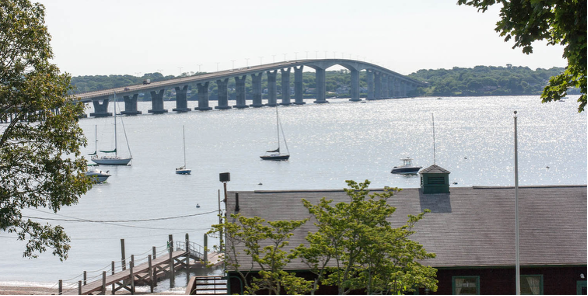
NDT Corporation performed a comprehensive, multi-phase nondestructive evaluation (NDE) of the Jamestown-Verrazzano Bridge, a 4,950-foot-long segmental concrete box girder structure.
Following a 1999 baseline inspection that raised concerns about creep deflections and grouting effectiveness, NDT utilized high-resolution impact-echo testing to map internal voids and evaluate the long-term durability of the bridge's post-tensioning system.
The project remains a benchmark for large-scale NDE applications on critical transportation infrastructure.
Scope
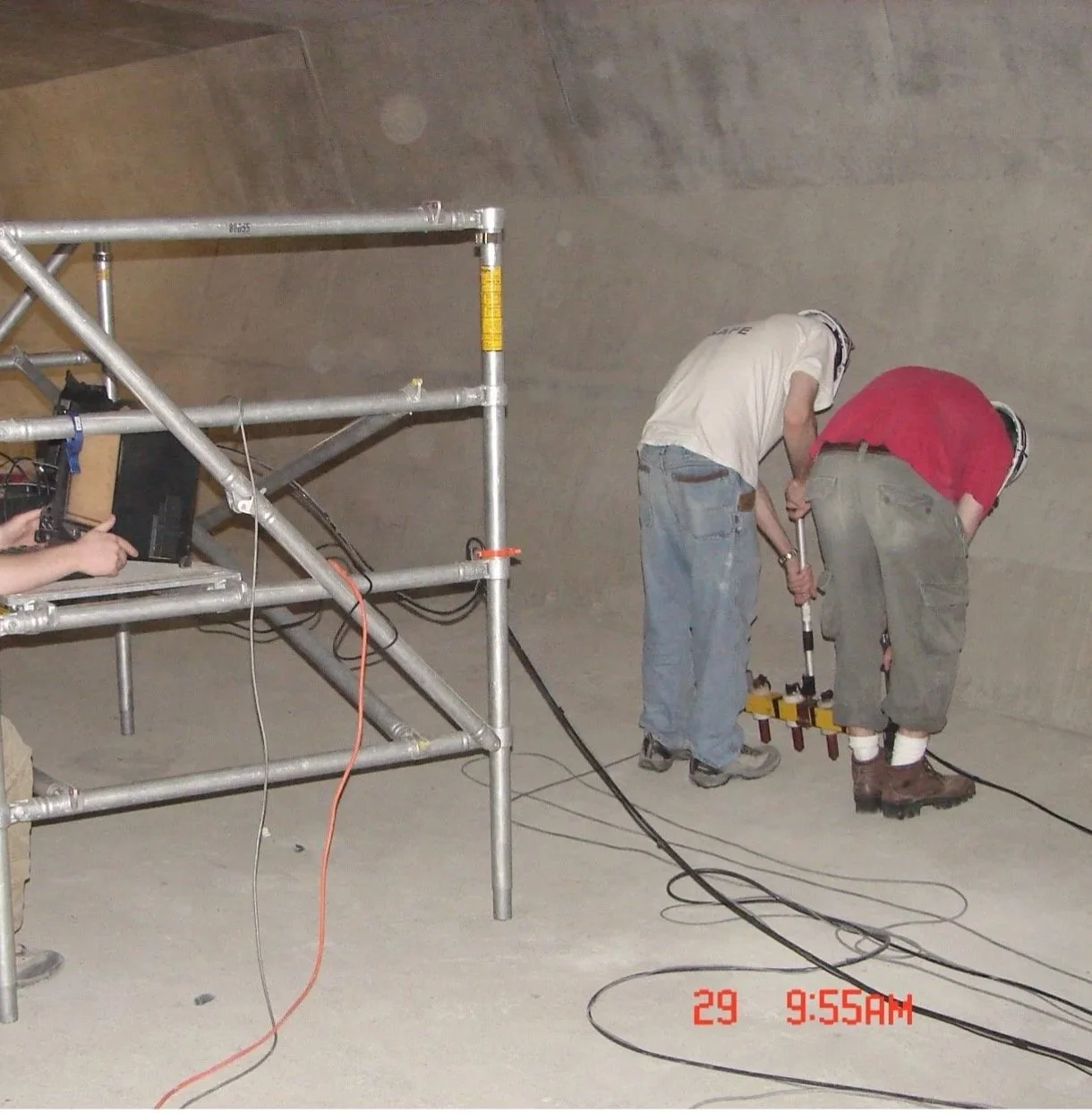
Massive Data Collection: Performed over 92,000 linear feet of nondestructive Impact-Echo Pulse Velocity (IE/PV) measurements across the top slab, webs, and bottom slab of the box girders.
Comprehensive Duct Inspection: Evaluated approximately 1,520 individual tendon ducts to identify internal anomalies.
Targeted Web Analysis: Conducted 100% inspection of continuous draped web tendons within the main spans to address structural vulnerability.
Statistical Validation: Utilized ANSI/ASQC Z1.4-1993 sampling standards for phase-based investigations, ensuring a mathematically credible assessment.
Direct Verification: Employed video borescope inspections through 1-inch diameter holes to physically confirm NDE findings and assess the condition of exposed strands.
Solution
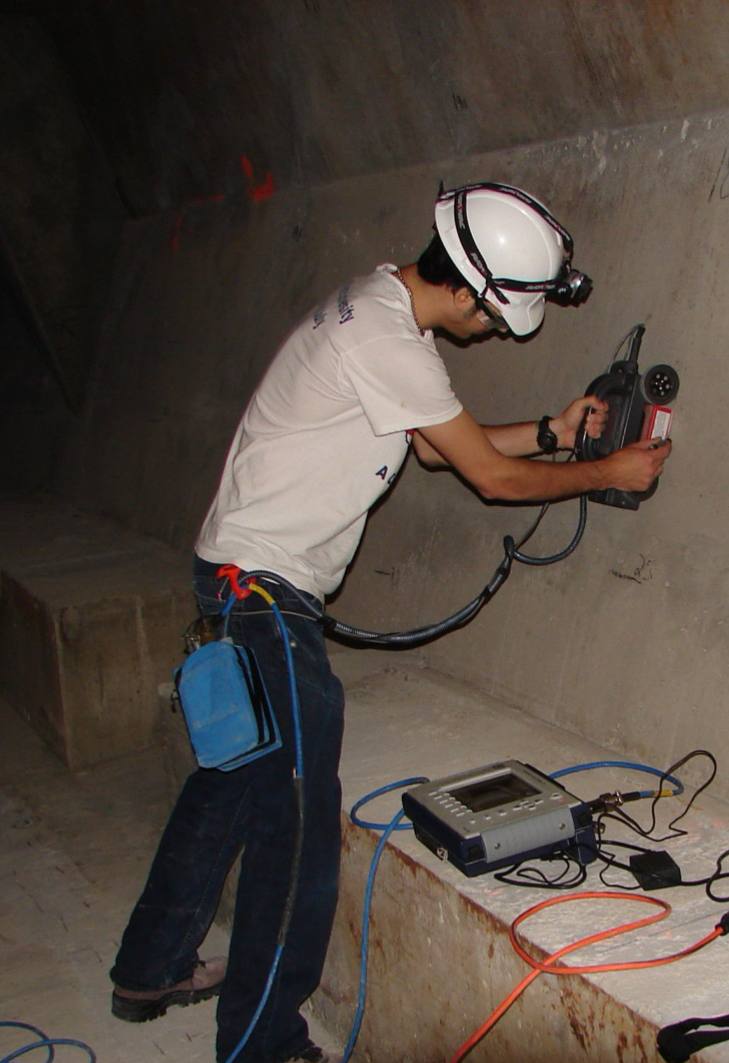
Precision Void Mapping: Successfully identified 114 ducts containing voids, ranging in length from 1 foot to over 310 feet.
Corrosion Identification: Located regions where tendons were not fully encapsulated in grout; while most strands remained in good condition, NDT documented areas of light surface corrosion for targeted maintenance.
Forensic Repair Guidance: Provided the critical data required for the design of a rehabilitation program, which included vacuum-assisted grout injection and the application of Carbon Fiber Reinforced Polymer (CFRP) to repair cracking in the pier table webs.
Long-Term Asset Management: Delivered a comprehensive digital map of the post-tensioning system’s internal condition, allowing the owner to move from reactive maintenance to a data-driven preservation strategy.