
Structural Integrity Investigation of Concrete Bridge Abutments
Summary
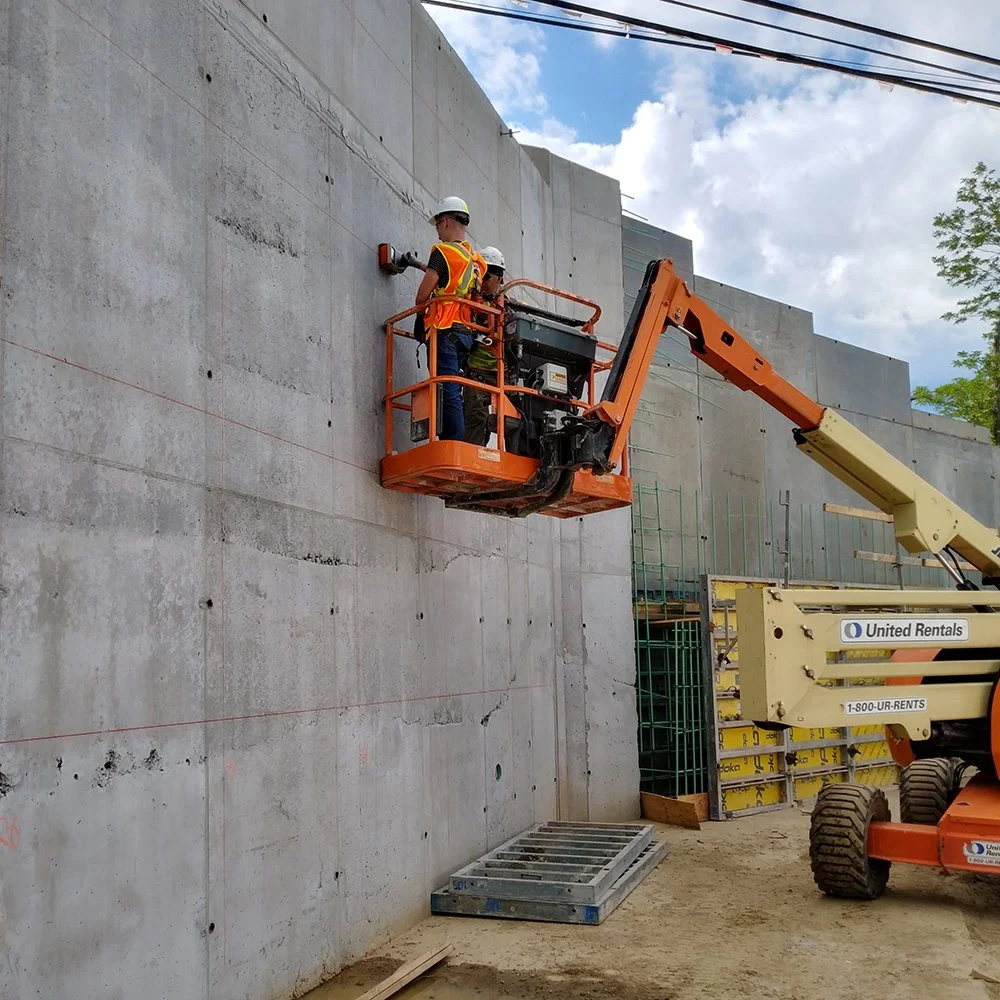
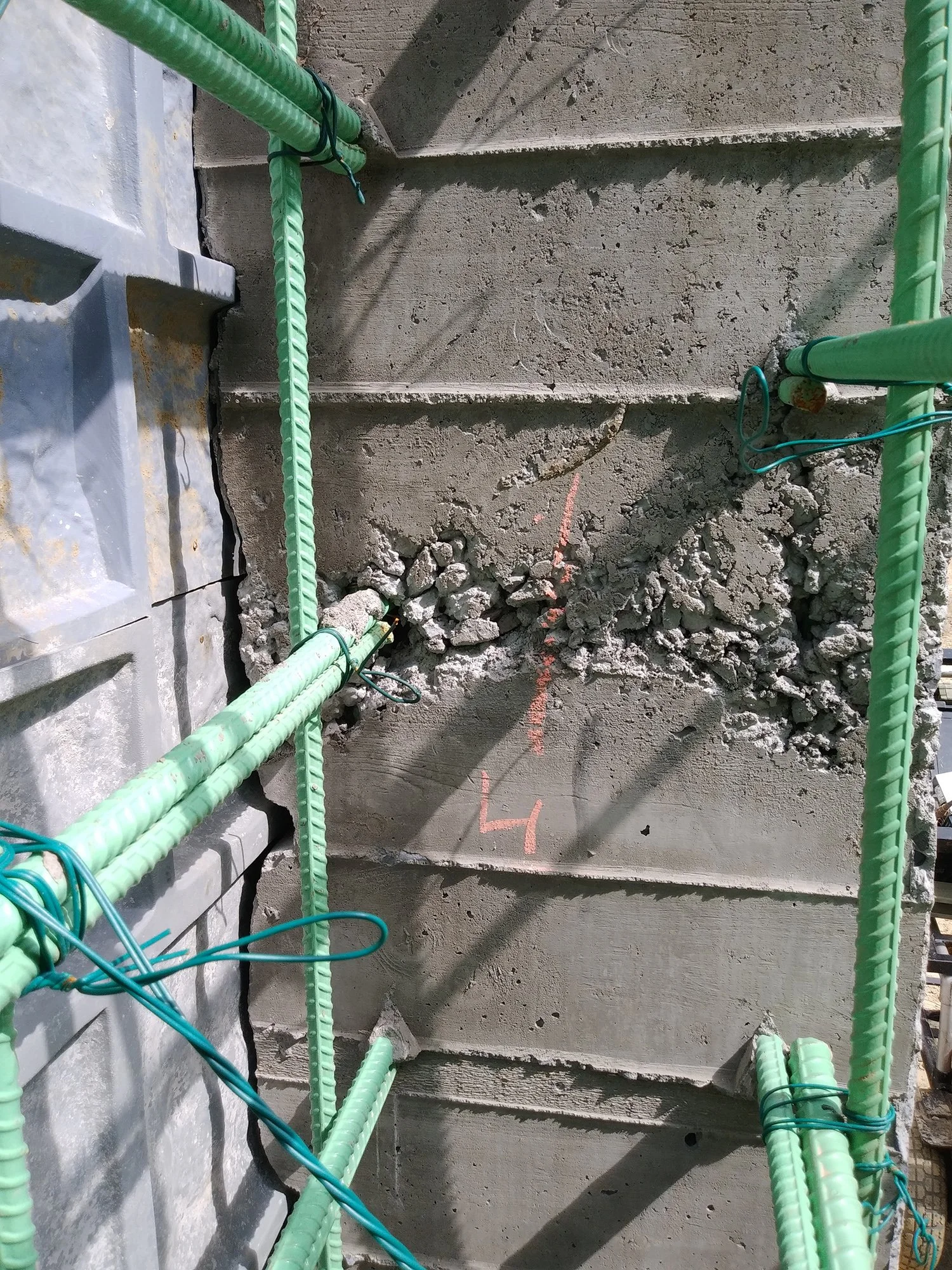
During the construction of new concrete bridge abutments in Cornwall, NY, delays in concrete placement and issues with consolidation led to visible defects upon formwork removal.
The contractor and owner observed significant cold joints, segregation, and honeycombing.
NDT Corporation was retained to perform an independent forensic evaluation to quantify the depth and severity of these defects and determine if the structural integrity of the newly placed abutments was compromised or if the issues were merely aesthetic.
Scope
Grid-Based Mapping: Established a 5-foot diagnostic grid across both faces of the abutment stems to ensure systematic data collection.
Reinforcement Verification: Utilized Ground Penetrating Radar (GPR) to determine the actual cover depth of the steel reinforcement and identify any interference for acoustic testing.
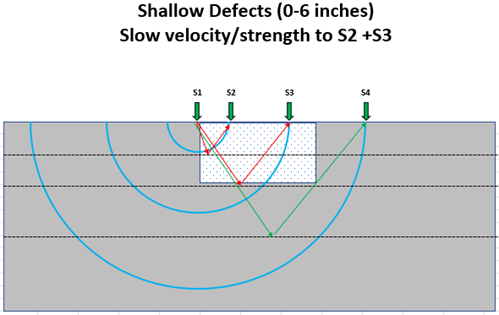
In-Situ Strength Profiling: Conducted proprietary Impact Echo/Pulse Velocity (IE/PV) testing to measure concrete compressive strength at the surface and at depths of 3, 6, and 9 inches.
Bond Assessment: Performed IE/PV measurements across visible horizontal cold joints to evaluate the degree of fusion between vertically placed concrete lifts.
Through-Transmission Testing: Before backfilling, NDT conducted "through-testing" by placing energy sources and sensors on opposite faces of the abutment stem to quantify the full-thickness internal integrity.
Solution
Cold Joint Validation: IE/PV data confirmed sufficient bonding between the various vertical lifts. Velocity measurements proved that the energy waves transitioned across the cold joints without significant attenuation, indicating a structurally sound interface.
Defect Depth Quantification: NDT’s depth-profiling results demonstrated that the honeycombing and weak concrete strengths were localized to the outer 3–4 inches of the stem.
Internal Integrity Confirmation: Acceptable concrete strengths were documented at and beyond a depth of 6 inches, and through-testing verified that the core of the abutment was consolidated and free of internal voids.
Asset Acceptance: By providing quantitative data that supported the results of targeted concrete cores, NDT helped engineers determine that the abutments met structural requirements. This prevented the costly rejection and demolition of the new structures, allowing the project to proceed with only surface-level repairs.