
Precision Reinforcement Mapping for Wastewater Infrastructure
Summary
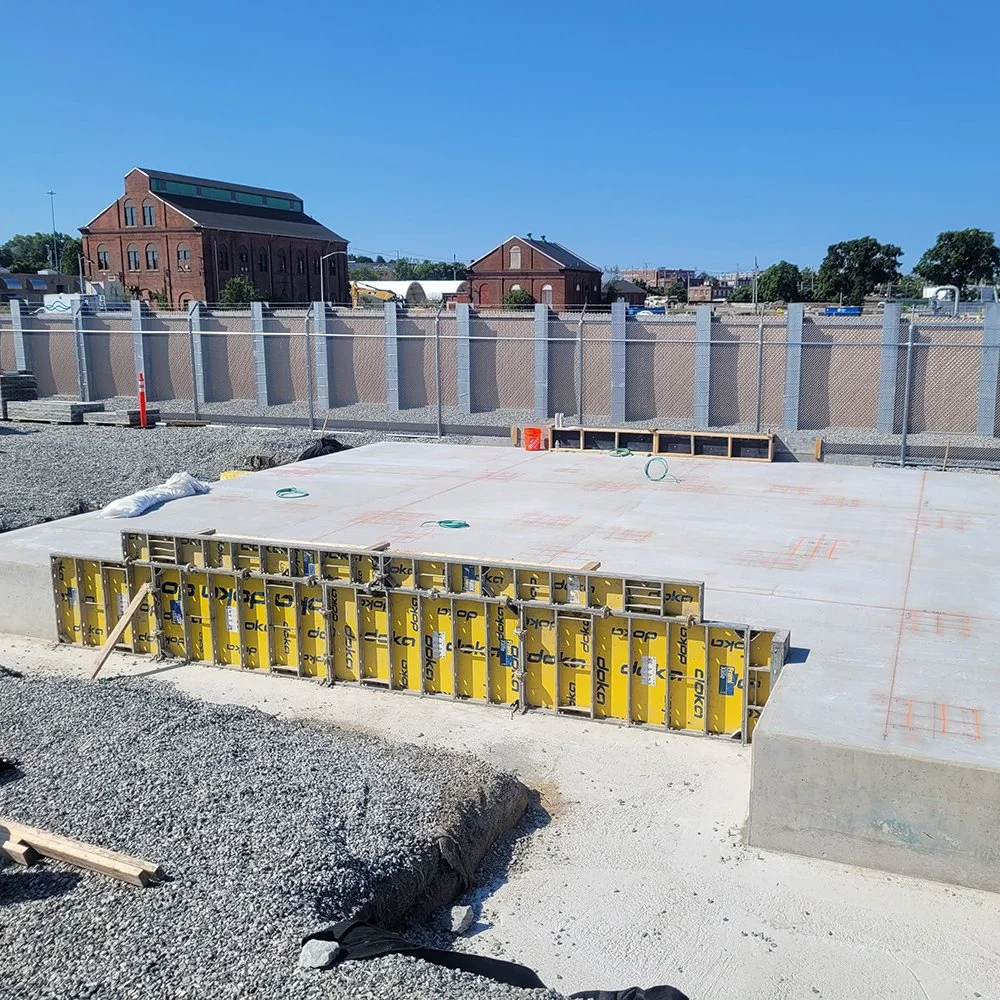
During a facility upgrade at a sewage treatment plant in Providence, RI, National Grid required the installation of heavy equipment on an existing 30ft x 30ft elevated concrete slab. To secure the equipment, the contractor needed to drill and grout anchor bolts at 20 specific locations.
NDT Corporation was retained to perform high-resolution Ground Penetrating Radar (GPR) mapping to ensure the drilling operations did not compromise the structural integrity of the slab by striking the embedded reinforcement.
Scope
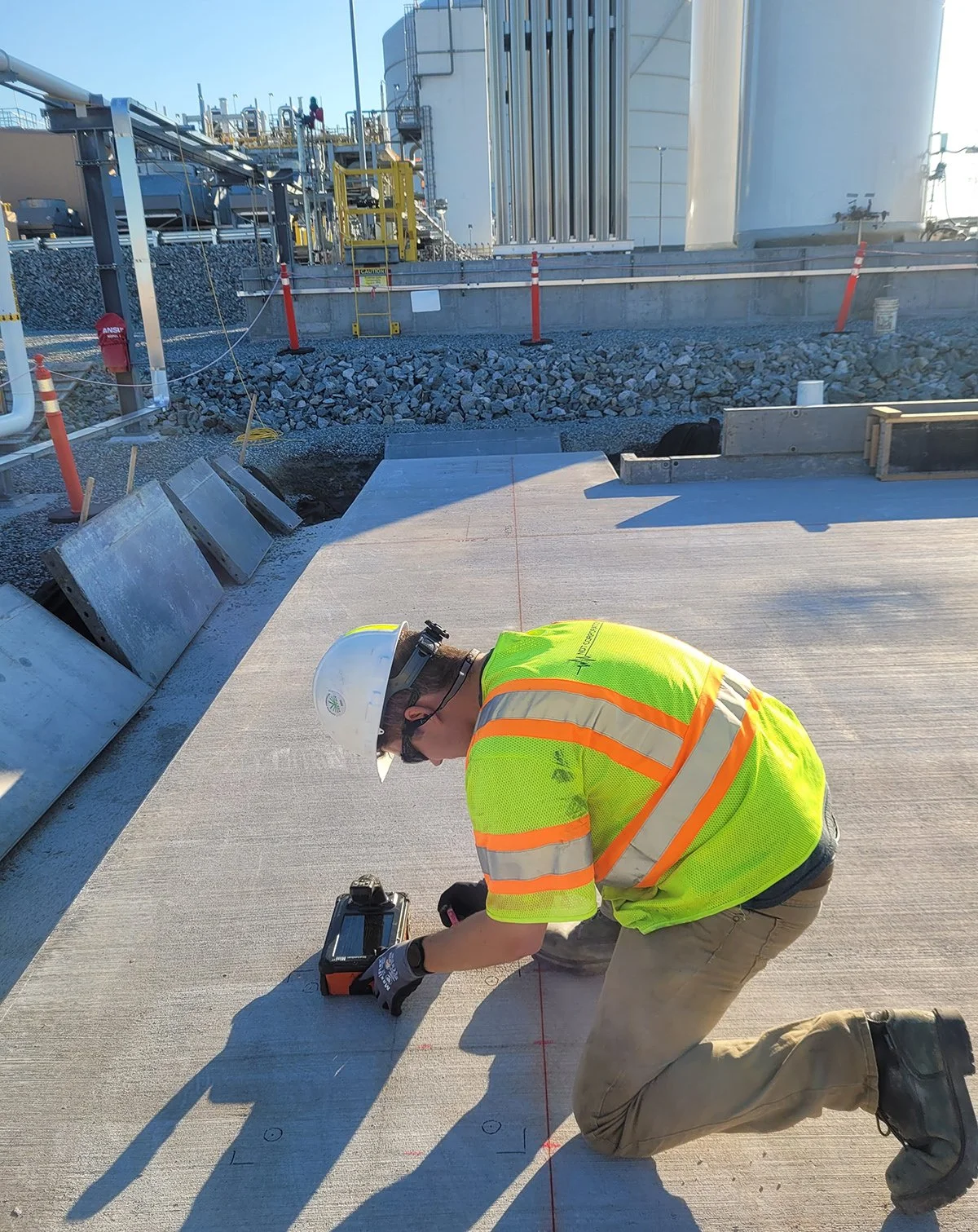
Non-Destructive Scanning: Deployed Ground Penetrating Radar (GPR) across the elevated slab to visualize the internal reinforcement grid without the need for destructive testing or core sampling.
Electromagnetic Imaging: Utilized GPR’s high-frequency electromagnetic pulses to detect reflections from conductive steel rebar, providing real-time data on the horizontal position and depth of the bars.
Localized Area Mapping: Conducted focused scans at 20 pre-determined equipment support locations to provide precise clearance for anchor bolt paths.
On-Site Layout: Translated GPR data directly onto the concrete surface, marking the exact layout of the rebar grid for the drilling crews.
Solution
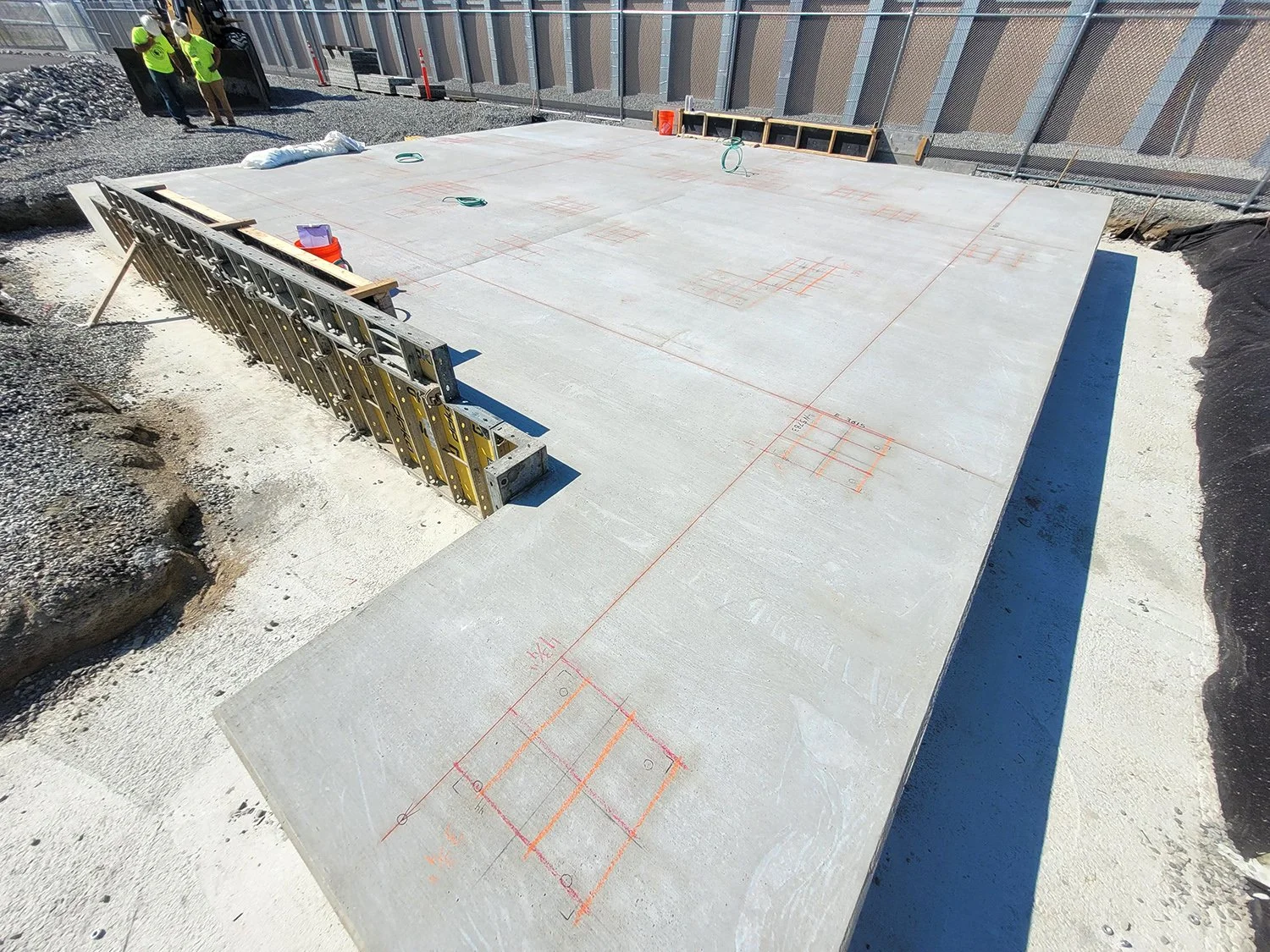
Conflict Avoidance: Successfully identified and marked the reinforcement at all 20 areas of interest, providing "clear zones" for the installation of anchor bolts.
Structural Preservation: By providing accurate positioning data, NDT enabled the contractor to complete the drilling and grouting operations without a single rebar strike, maintaining the design capacity of the elevated slab.
Optimized Installation: The precision of the mapping allowed for the secure mounting of the equipment on the first attempt, eliminating the downtime and structural patching associated with "missed" holes or damaged steel.
Risk Mitigation: Provided the owner with the quality assurance that the new equipment was safely anchored into a structurally intact slab, meeting the rigorous safety standards required for wastewater treatment environments.