
Foundation Depth Verification for Rail Bridge Fender System
Summary
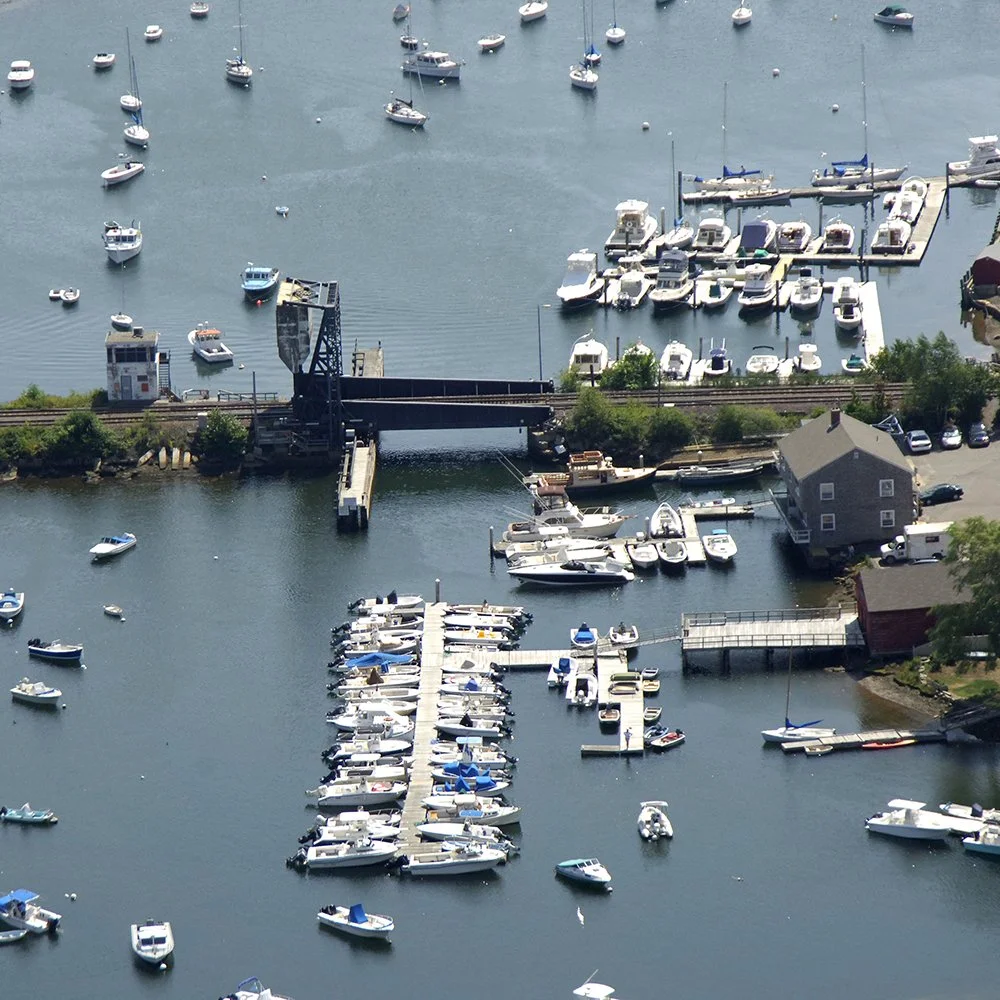
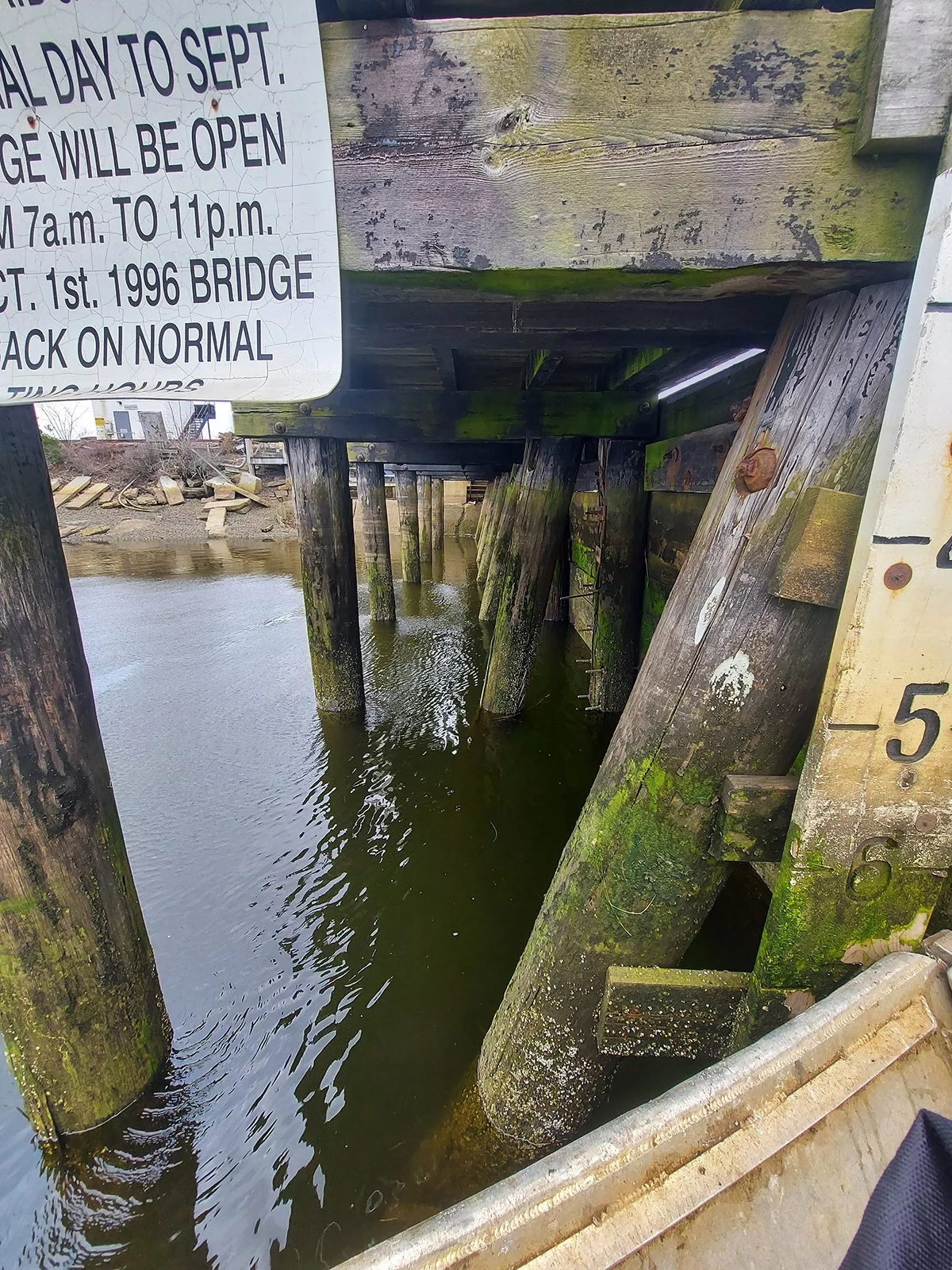
The Newburyport/Rockport rail line crossing at Manchester Harbor is protected by a critical fender system designed to safeguard bridge abutments from vessel strikes and debris.
Comprising 48 timber piles and 11 steel sheet piles, the system’s "as-built" embedment depths were unknown due to a lack of historical documentation. This data gap became a significant hurdle during the planning of a new underwater communication line, as engineers needed to determine a safe depth for directional boring to avoid striking the existing foundation elements.
NDT Corporation was contracted to perform pulse-echo pile integrity testing to definitively ascertain the lengths of both the timber and steel components.
Scope
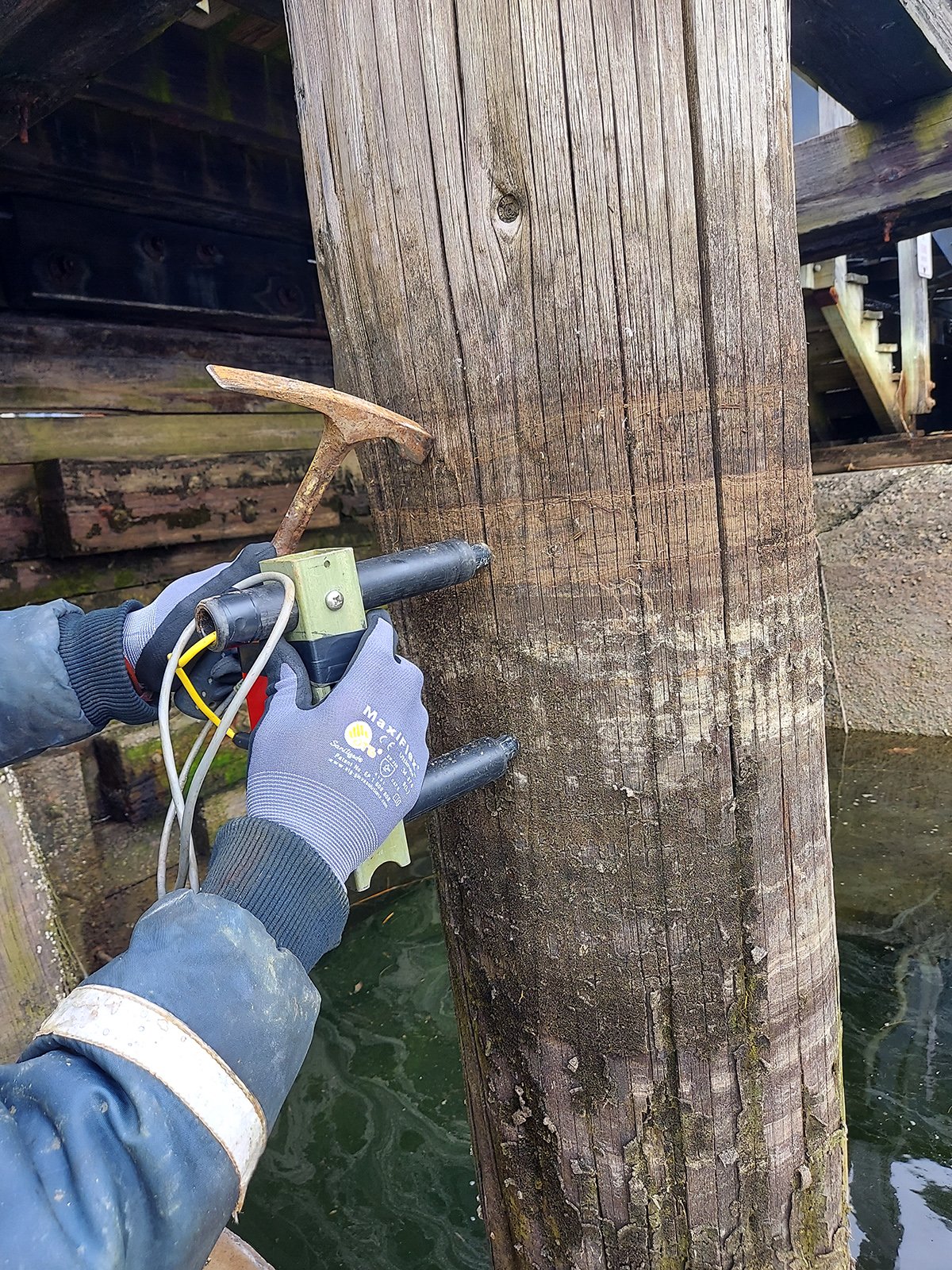
Pulse-Echo Integrity Testing: Utilized the ASTM D5882 standard for low-strain impact integrity testing to measure stress wave reflections from the pile toes.
Specialized Instrumentation: Employed NDT Corporation’s proprietary two-sensor setup with a handheld hammer as the excitation source to capture high-resolution wave propagation data.
Marine-Based Access: Conducted testing of the timber fender piles via boat access from the harbor, while utilizing low-tide windows to access and test the steel sheet pile sections from the shoreline.
Subsurface Profiling: Analyzed the time-of-flight for reflected waves to calculate accurate pile lengths based on the specific wave velocities of timber and steel.
Solution
Dimensional Accuracy: Successfully determined that the timber piles averaged 50 feet in length and the steel sheet piles reached depths of approximately 40 feet.
Boring Path Optimization: Provided the precise vertical and lateral clearance data required for the safe execution of directional boring, ensuring the new communication line avoided all foundation obstructions.
Condition Assessment: Beyond length verification, the pulse-echo data identified internal anomalies indicative of cracked or broken timber piles.
Deterioration Mapping: Visual inspections combined with ultrasonic thickness measurements revealed severe section loss and thinning in the steel sheet piles, providing the owner with a prioritized list for structural maintenance.
Risk Mitigation: Enabled the project to proceed on schedule by replacing "unknown" variables with defensible engineering data, preventing accidental strikes and potential damage to the bridge's protective fender system.