Structural Preservation Study of a Five-Span Bridge Substructure
Summary
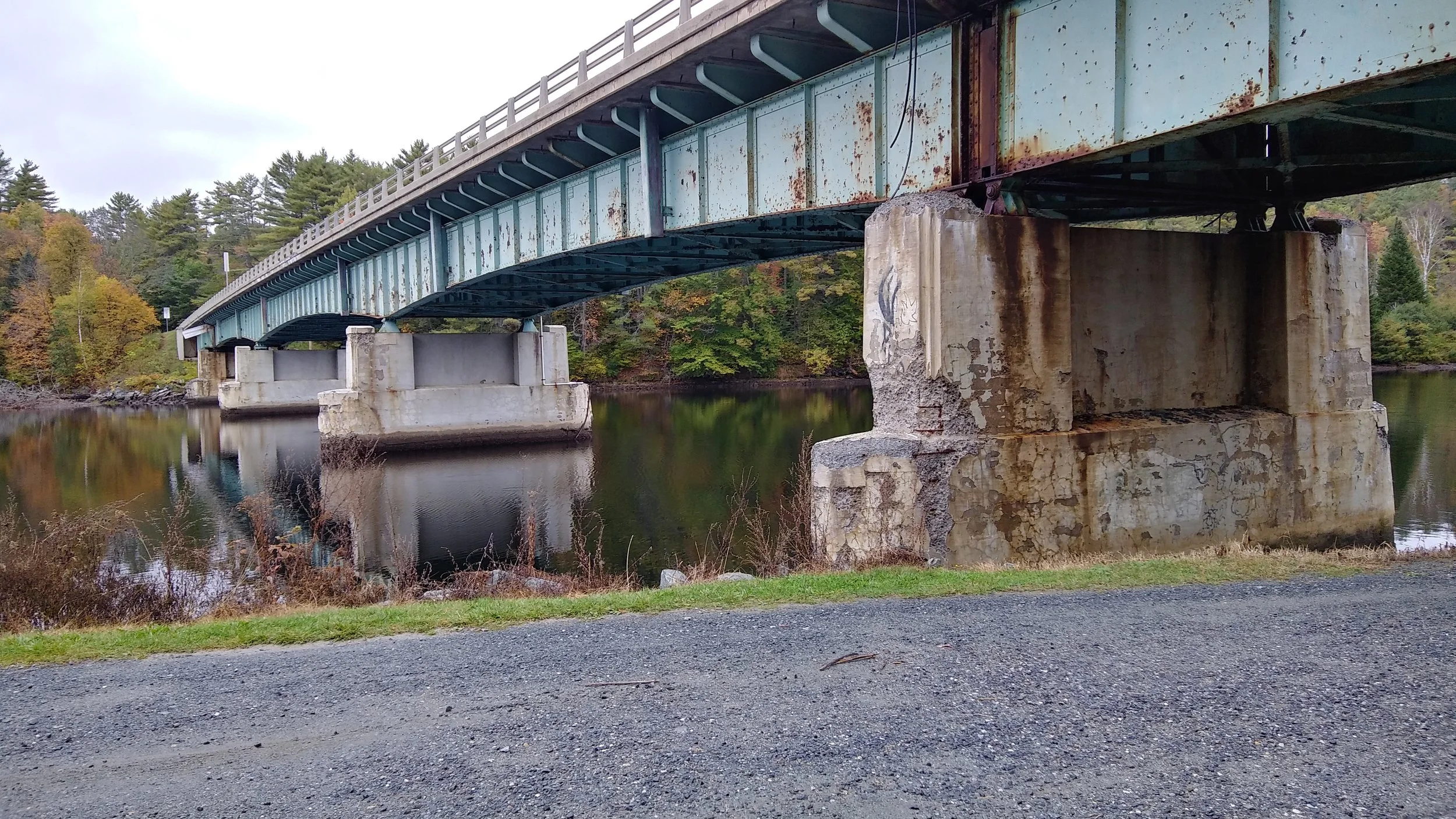
During a major superstructure replacement project, an engineering consultant needed to determine the viability of preserving the existing concrete substructure. The internal condition of four bridge piers and two abutments was unknown, and the project's success depended on whether the substructure could be rehabilitated with surface repairs or required total demolition and replacement. NDT Corporation was retained to provide the quantitative data necessary to assess the durability and remaining service life of these critical components.
Scope
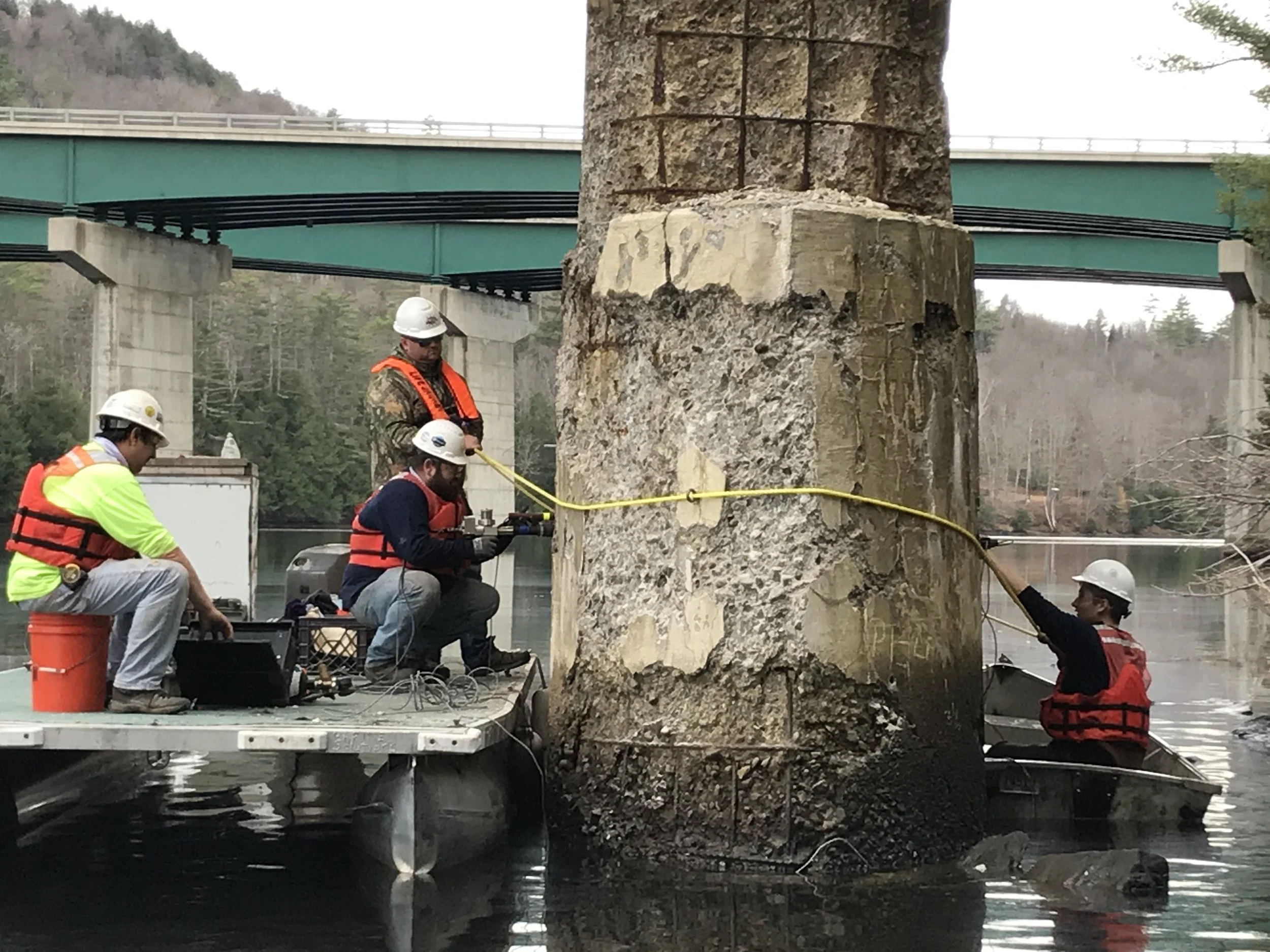
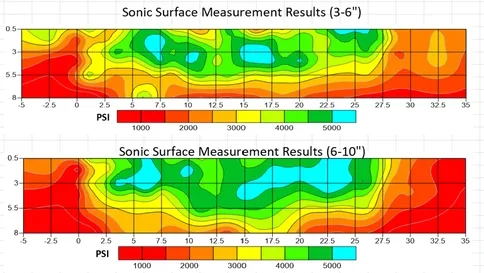
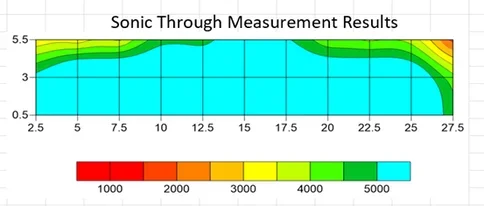
In-Situ Strength Profiling: Utilized proprietary Impact Echo/Pulse Velocity (IE/PV) testing at the concrete surface and through-transmission measurements to calculate compressional and shear wave velocities.
Corrosion Risk Assessment: Collected half-cell corrosion potential measurements to identify active corrosion zones and evaluate the long-term risk to the reinforcement.
Reinforcement Mapping: Employed Ground Penetrating Radar (GPR) to determine rebar cover depth and locate internal anomalies.
Deterioration Quantification: Mapped the depth, severity, and extent of concrete degradation to differentiate between surficial weathering and deep structural distress.
Solution
Integrity Confirmation: Surface and through-testing measurements confirmed that the internal concrete core of the piers and abutments remained structurally sound, with compressive strengths meeting design requirements.
Targeted Repair Strategy: NDT’s mapping demonstrated that the observed deterioration was limited to the exterior, proving that shallow surface repairs would be sufficient to extend the substructure's service life.
Substantial Cost Savings: By confirming the substructure was suitable for reuse, the project team avoided the massive expense of removing and replacing the existing pier foundations.
Schedule Acceleration: The decision to preserve the substructure reduced the overall construction timeline by several months, significantly minimizing traffic disruptions and project overhead.